Athens rewards a clear route, not a frantic checklist. In three days, we’d give the Acropolis a full morning, keep ancient sites grouped by neighborhood, then choose between a day trip and a slower final day in the city. This plan covers timing, transit, known costs, and the stops we’d cut when your feet start complaining.
Step 1: Set Up Your Athens Route Before You Arrive
A good Athens itinerary 3 days plan starts before your flight. Book the Acropolis first, then build the rest of the trip around that visit.
Morning is the safest choice for the Acropolis. The site gets hot, the stone paths can feel slick, and crowd levels rise fast. One source recommends allowing about one hour at the Acropolis, while other first-hand itineraries allow two hours when visitors stop for photos and context. We’d block two hours, then keep the next stop close.
Buy the ticket through the official booking route available when you plan your trip. Check the admission details before paying. Confirm the rules for your visit, and avoid arriving without the required ticket or information.
Stay inside the central area if you can. A base near Syntagma, Monastiraki, or Acropoli keeps most of this route walkable. You’ll spend less time crossing the city and more time sitting down for lunch, which is a fine use of travel time.
For airport travel, the metro is the clear first choice for many visitors. The airport metro journey to Syntagma takes about 40 minutes. Check the current transit rules before relying on a ticket, and confirm what is required for your route.
Follow OASA’s validation instructions: tap an ATH.ENA ticket or card when boarding a bus, trolleybus, or tram, and when entering and exiting metro gates. Carry a fare valid for your route; airport services have separate fare rules.
We’d also save the route offline. Athens is easy to walk in the center, but a dead phone battery turns one wrong turn into a long uphill detour.
By now you should have an Acropolis visit planned, a central base, and an airport plan. Don’t add a day trip yet. First, protect your two city days.
Step 2: Spend Day 1 at the Acropolis and Anafiotika
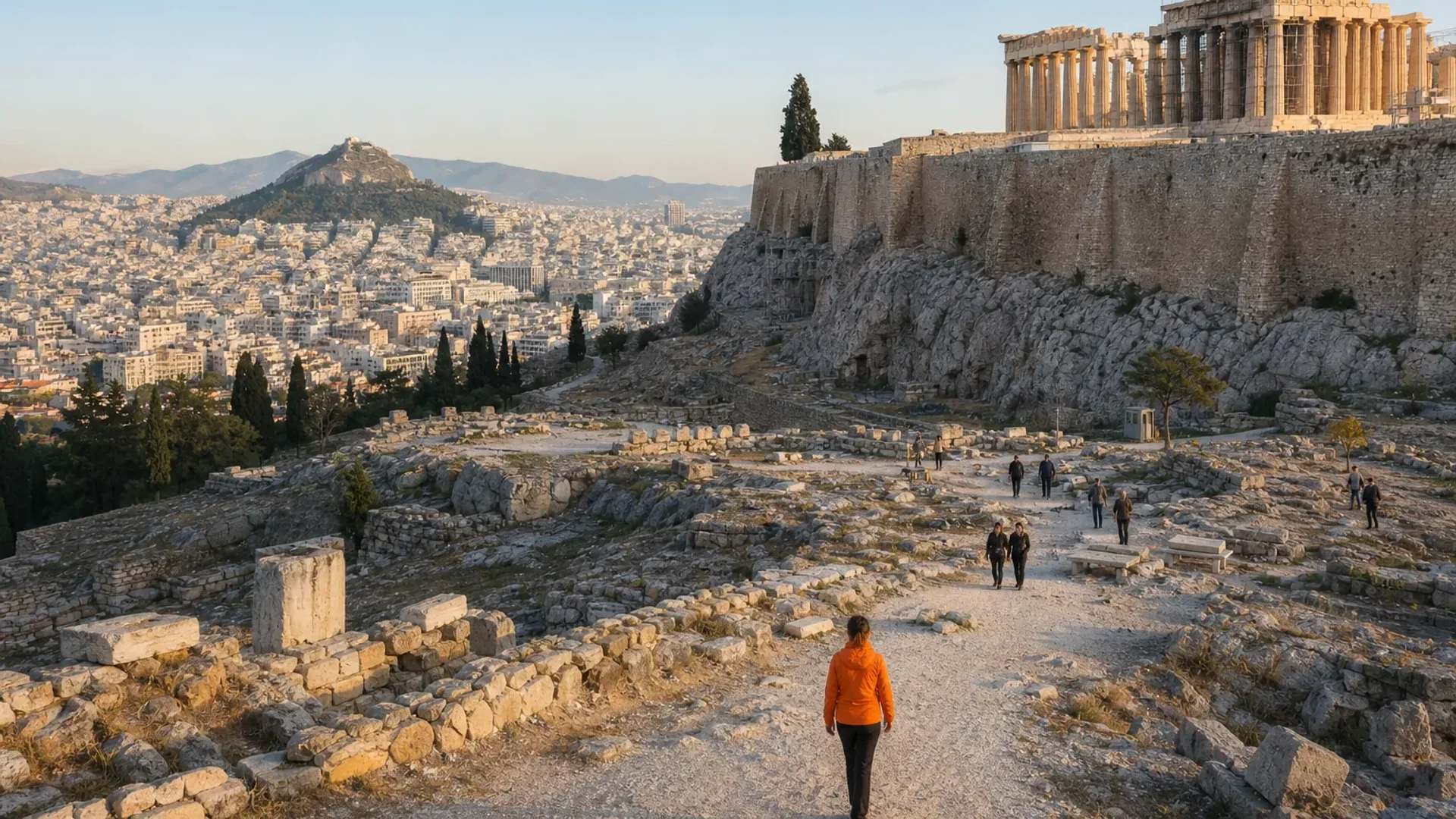
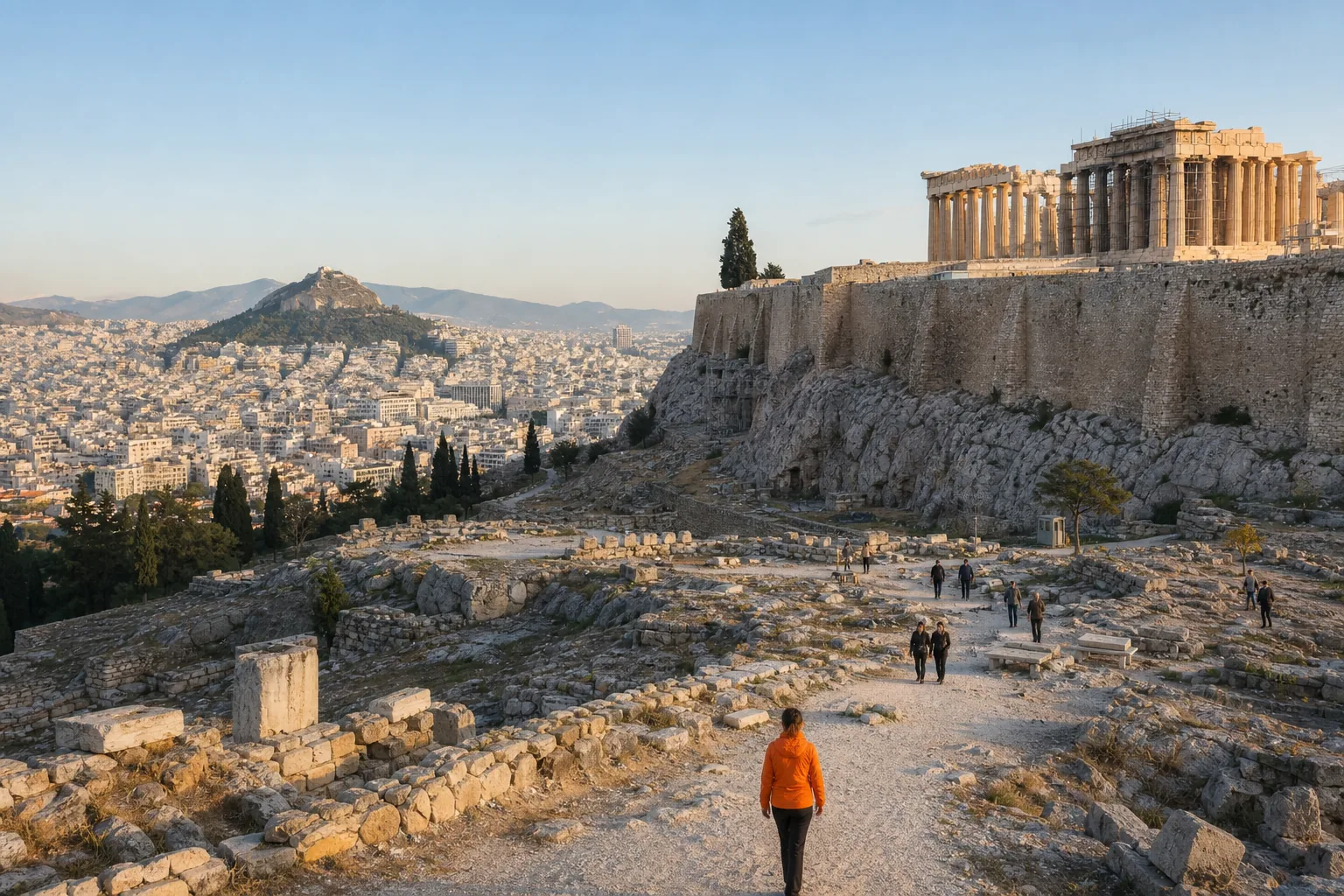
For this Athens itinerary 3 days route, day one belongs to the Acropolis. Put the biggest sight first while your legs are fresh.
Arrive early enough to pass security and reach the entrance without rushing. Wear shoes with a firm grip. The paths are uneven, and polished stone becomes a problem after rain. Bring water, but don’t plan to eat inside the complex.
Give the Acropolis about two hours if you want to see the Parthenon, other major structures, and the Odeon Amphitheatre without sprinting. If ancient sites don’t hold your attention for long, one focused hour can work. The point is to look up, read a little, and leave before the visit turns into heat management.
The Acropolis is the high point of ancient Athens. The word itself comes from Greek terms for high city, and the site has shaped how people understand the city for centuries. A background overview gives useful context before you arrive, especially if you want the names to mean more than a blur of marble.
After the hill, walk downhill toward the Acropolis Museum. Visit it while the ruins are still fresh in your mind. The galleries give context to the sculptures and buildings you just saw, and the top floor lines up with the Parthenon outside.
Take lunch after the museum, not before the climb. Plaka is convenient and atmospheric, but it can be busy. Koukaki gives you a calmer place to sit near the museum. We’d choose based on the first open table rather than spend 30 minutes hunting for a supposedly perfect meal.
In the afternoon, walk through Anafiotika. Its narrow lanes and whitewashed homes feel different from the broad streets below. It’s small, so don’t treat it as a half-day attraction. Thirty to 60 minutes is enough for a slow walk and a few photos.
Then choose one nearby ancient stop. The Roman Agora is a sensible add-on because it sits close to Plaka and includes the Tower of the Winds. The Odeon Amphitheatre also works if you want another historic structure without crossing the city.
End the day with dinner near Plaka or Monastiraki. We’d keep the evening short if you have another early start.
The guide won’t always tell you this: the Acropolis is enough for one morning. Don’t force every nearby ruin into the same block just because your ticket or map makes it look easy.
Step 3: Use Day 2 for Ancient Athens, Markets, and Central Neighborhoods
Day two of an Athens itinerary 3 days plan should feel less scheduled. Start with one ancient site, then let the market streets and neighborhoods set the pace.
Begin at the Ancient Agora if you still want more ruins. It was a civic center as well as a place for trade and public life. Walk through the grounds at a comfortable pace and use the site map to orient yourself.
Next, move toward Monastiraki. This is a good place for a quick lunch. Atlantikos is a named option in the same research, with a seafood focus and a more relaxed meal.
Use the central market and nearby streets as a route, not a challenge to buy something at every stall. Athens can feel loud and crowded here. That’s part of the city, but it can also drain you after two hours. Step into a side street when you need a break.
The city’s ancient and modern layers sit close together. You can walk past apartment blocks, turn a corner, and find a Roman-era site. The Ancient Agora itself is best taken slowly.
For the afternoon, choose one neighborhood walk. A free walking tour can help if you want the city’s political and social story. Otherwise, walk through Psirri and then return toward Monastiraki. We’d skip a second major museum unless you know you love archaeology.
Mount Lycabettus is the stronger choice for sunset if you want a wide view over the city. Check the current funicular fare if you plan to ride rather than walk up. You can also stay lower and find a rooftop view near Monastiraki. Both work. The hill adds transit and an uphill finish, while the rooftop saves your legs but gives you a busier setting.
For a drink after dinner, Baba Au Rum and The Clumsies are also listed. We’d pick one meal and one drink, then stop. Day three will punish a late night more than you expect.
Key Takeaway: Day two works when you choose one main ancient site, one neighborhood loop, and one evening view.
Step 4: Choose the Right Day 3 Excursion, or Stay in Athens
Your third day is where this Athens itinerary 3 days plan needs an honest decision. A day trip can add variety, but it can also turn the final day into a transport test.
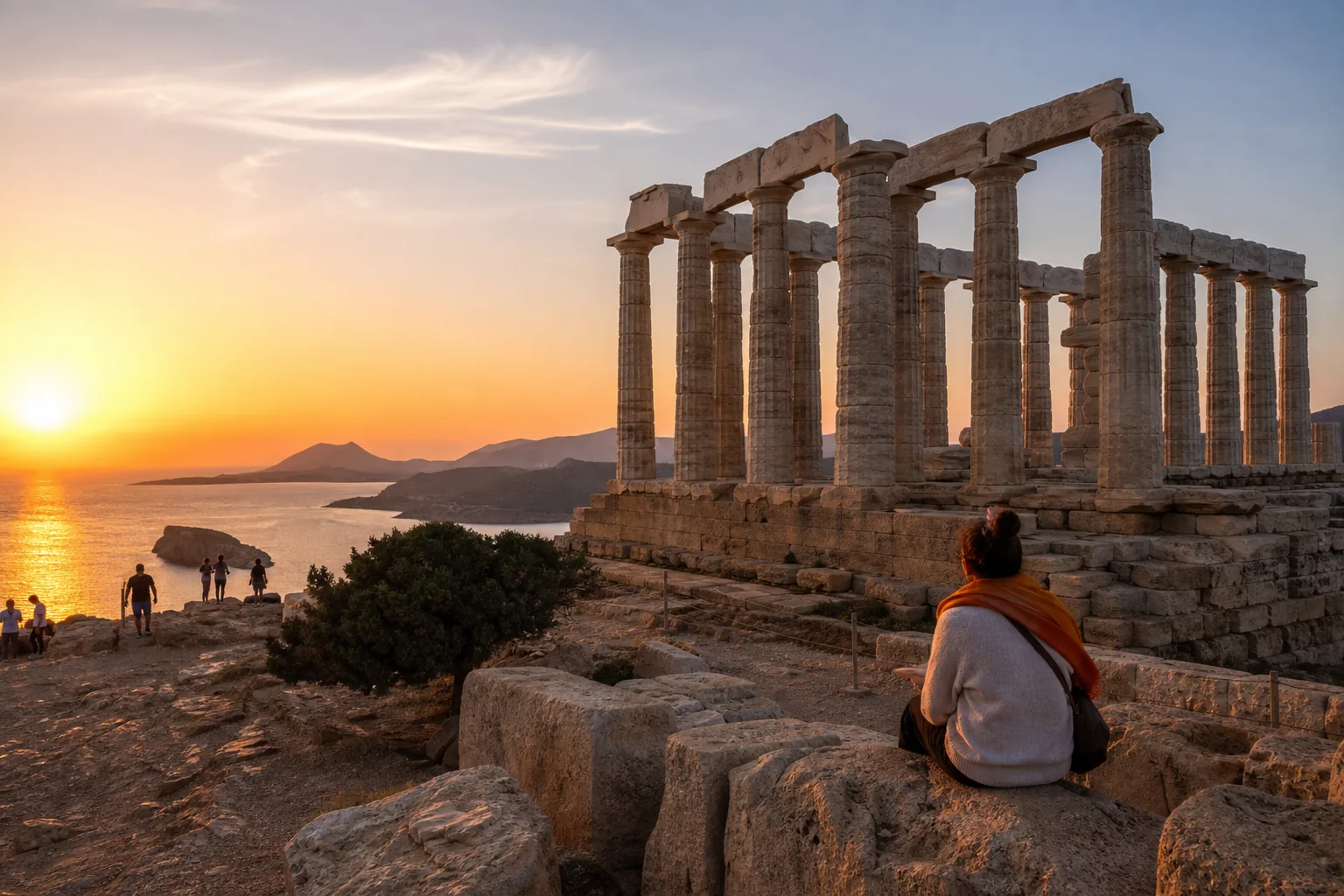
Choose the Temple of Poseidon if you want a shorter outing with a clear payoff. You’ll spend much of the day in Athens, then travel out for the site and evening light.
This route makes sense for travelers who want another major archaeological setting without giving up the whole day. It does require a late return, so don’t choose it before an early flight. Check the transport plan twice, especially if you’re relying on a connection back to central Athens.
Hydra and Nafplio also appear as possible choices. We’d pick Hydra only if the ferry schedule fits cleanly. Pick Nafplio if you care more about mainland history than island scenery.
Most readers should stay in Athens on day three. Use the morning for a free walking tour or a second pass through a neighborhood. Take lunch without watching the clock. Then visit any small site you skipped because day one was already full.
Another city day also gives you room for the Temple of Zeus or the Panathenaic Stadium. The stadium’s regular admission is €12, under the rate effective October 1, 2025. Don’t add both if you’re tired. One more site is useful. A string of rushed stops becomes a photo hunt.
For travelers staying longer in Greece, the route changes. A longer trip gives you time for islands without treating every ferry as a sightseeing stop.
We’d skip a car for a three-day Athens stay. Rent one only if your third day depends on a self-drive route. In the city, parking adds hassle without solving the main problem, which is distance between areas.
By now you should have chosen between a city day, Cape Sounion, Hydra, or Nafplio. Make that call based on your departure time, not on how many places you can mark on a map.
Step 5: Control Your Budget, Transit Time, and Final Evening
The budget for an Athens itinerary 3 days can stay reasonable because many stops are free or have modest costs.
Panathenaic Stadium is a historic site; regular admission is €12.
Temple of Poseidon is an archaeological site, with sunset as the best time of day.
The bus ride to Temple of Poseidon takes 1.5 hours.
Meteora day trip is a historic site.
Hydra day trip is a historic site.
Budget in euros, then check your payment provider’s exchange rate and fees if you use another currency. Confirm admission prices for your travel date before booking.
Plan each day around one paid anchor. Add free walks around it. This keeps the budget under control and prevents the common mistake of paying for several sites you only glance at.
Leave your final evening flexible. If you fly the next morning, stay near your hotel and eat close by. If you leave late, use the extra time for Anafiotika, Monastiraki, or one last rooftop view.
That matters because a ferry day can look cheap on paper while taking most of your usable day.
Pro Tip: Put every timed booking in your calendar with a 45-minute arrival reminder. Athens is walkable, but uphill streets and photo stops make short distances take longer.
FAQ
Is 3 days enough for Athens?
Yes, three days is enough for the main ancient sites, key neighborhoods, and one extra outing. An Athens itinerary 3 days long won’t show you every museum or district. It will give you a useful first look without forcing every stop into one crowded day.
How many days do you need in Athens?
You need three full days for a balanced first visit. Two days can cover the Acropolis and central neighborhoods, while four or more days allow slower museum visits and a day trip. For three days, book the Acropolis first and fit the rest around that fixed time.
What should I skip in Athens?
Skip a long day trip if your flight is soon after you return. Also skip extra ruins when you’re tired. The Acropolis, Acropolis Museum, Anafiotika, and one central neighborhood give more value than racing through six sites with no time to sit down.
Is the Athens metro worth using?
Yes, the metro is worth using for airport travel and longer city crossings. Transit fares vary by ticket type. Validate each ticket before boarding. For the central route, walking is often simpler.
What is the best area to stay in Athens for three days?
Stay near Syntagma, Monastiraki, or Acropoli for a short trip. These areas reduce walking between the main sights and connect well to transit. Koukaki and Plaka suit travelers who want to stay close to the Acropolis, while Syntagma is useful for airport connections.
Final Thoughts: Make the Three Days Count
We recommend booking the Acropolis first, grouping nearby sights, and keeping day three flexible. That gives you the history you came for without turning Athens into a timed obstacle course. Set the Acropolis reminder now, then leave one meal and one evening open. That’s usually where the city wins you over.
Solo female travel Costa Rica guide: how safe it is as of 2026, San José tips, a first route, bus vs shuttle vs car, and when a small group tour helps.
Verdict: Costa Rica is one of the easiest first solo trips in Latin America. As of November 2026 the US rates it Level 2 for crime, mostly petty theft, so plan San José nights carefully, use shuttles on long hops, and keep valuables close.
Solo female travel Iceland guide: how safe it is, the real risks (weather and roads), when to go, how to get around, and when a small group tour helps.
Verdict: Iceland is one of the easiest countries in the world for a woman to travel alone. The risk is the weather and the roads, not people, so plan around conditions, share your route, and consider a day tour for anything remote.
Scared to travel alone? Name the fear, shrink the trip, plan the first night, and let the nerves ride along. A first-timer's honest guide from Maren.
Verdict: You will not stop being afraid before you go. Shrink the trip, plan the first night, and go scared. The fear gets smaller once you are moving.