People who have never traveled alone tend to ask me the same question, phrased politely in different ways: what is the point? Why pay full price for a room, eat dinner with a book, and navigate a foreign train station with no one to check your work?
I used to deflect with something light. Now I give the honest answer: solo travel changed how I operate as a person, not just how I vacation. And in the last two years, the data has caught up with what solo travelers have been saying anecdotally for decades. The benefits are real, they are measurable, and they are not what the Instagram version of solo travel suggests.
Here is what going alone actually does for you, with the numbers to back it up.
The Headline Number: 78 Percent
The largest recent dataset on this comes from Hostelworld’s State of Solo Travel 2025 report, which surveyed 3,334 solo travelers in July 2025 against booking data from over four million annual trips. The standout finding: 78 percent of solo travelers report a boost in confidence, emotional healing, or mental wellbeing from traveling alone.
That is not a cherry-picked wellness statistic. A separate Global Rescue survey of experienced travelers found that 71 percent of U.S. respondents said a solo trip was important for their mental health. And the academic side is converging on the same conclusion: research published in 2025 on the psychology of solo travel found measurable improvements in self-efficacy, resilience, and interpersonal skills among solo travelers, alongside reductions in anxiety and stress.
Three independent sources, one direction. So what is actually happening on these trips that produces that effect? In my experience, and in the survey breakdowns, it comes down to five distinct benefits.
1. Confidence You Cannot Get at Home
The confidence gain from solo travel is specific, and it is worth being precise about. It is not “I feel good about myself” confidence. It is evidence-based confidence: you now have proof that you can land in a city where you know no one, speak none of the language, and still find your hotel, feed yourself, solve the missed connection, and enjoy the day.
Psychologists call this self-efficacy — the belief that you can handle what comes — and the 2025 research identifies it as the core mechanism of solo travel’s benefits. You build it the same way you build muscle: by actually lifting the weight. Every small solved problem on a solo trip is a repetition. There is no one else to hand the problem to, which is exactly why the repetition counts.
In the Hostelworld data, 52 percent of solo travelers named challenging themselves as a primary motivation, and women reported the confidence effect more strongly than men. I have watched this play out in my own life: the person who negotiated a taxi fare in a language she did not speak is noticeably harder to rattle in a work meeting back home.
2. A Mental Reset That Group Trips Cannot Deliver
Here is the thing about traveling with other people, even people you love: you are still managing a relationship. You are negotiating restaurant choices, pacing, moods, budgets. A group trip is often wonderful, but it is rarely restful in the deeper sense.
Solo travel removes the negotiation layer entirely. In the Hostelworld survey, 47 percent of women said solo travel left them mentally refreshed, against 37 percent of men, and 52 percent of all respondents named reconnecting with themselves as a motivation for going alone.

What that looks like in practice is almost embarrassingly simple. You eat when you are hungry. You leave the museum after forty minutes because you are done, or stay four hours because you are not. You sit at a café for an entire morning without anyone wondering what the plan is. After my divorce, those unnegotiated mornings did more for my head than anything a therapist’s waiting room playlist ever managed — I wrote about that recovery in solo travel after divorce, and the mechanism was exactly this: time where nobody needed anything from me.
3. Total Freedom Over the Itinerary
This one sounds trivial next to mental health, but ask actual solo travelers and it tops the list. In Solo Female Travelers Club research cited in Tripplo’s 2026 solo travel statistics roundup, 85 percent of women named freedom and flexibility as a key benefit of traveling alone.
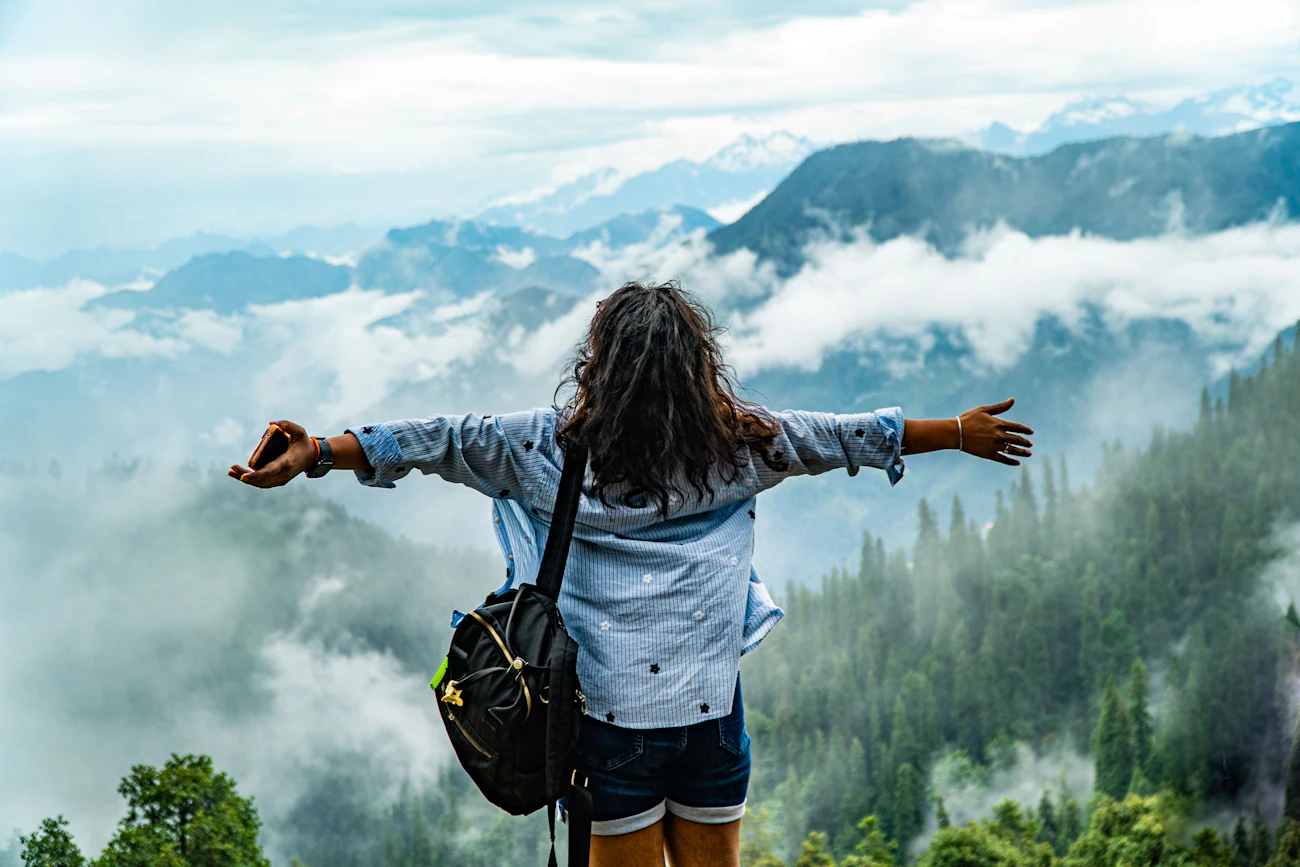
Freedom compounds in ways you do not predict. It is not just choosing the itinerary — it is being able to abandon it. Alone, you can extend a stay in a town you unexpectedly love, skip the famous sight that bores you, change countries because someone at breakfast described a ferry route. Every experienced solo traveler has a story that begins “I was supposed to leave on Tuesday, but.” Those stories are usually the best thing that happened on the trip, and they are structurally impossible when three people have already paid for the next hotel.
The same statistics roundup notes the solo travel market was valued at $482 billion in 2024 and is projected to reach roughly $1.07 trillion by 2030. The industry has noticed that people will pay for this freedom.
4. More Connection, Not Less
The loneliness objection is the one I hear most, and the data dismantles it better than I can. From the Hostelworld report:
| Social outcome | Share of solo travelers |
|---|
| Actively seek connection with others on the road | 71% |
| Form meaningful friendships while traveling | 68% |
| Stay in contact with people met traveling | 52% |
Read that middle line again: over two-thirds of solo travelers form real friendships on the road. This matches my experience so exactly that I suspect the number is conservative. Traveling alone makes you radically more approachable. Couples and groups are closed social units; a woman alone at a hostel kitchen counter or a food tour is someone you can talk to. I have friendships going back years that started with “is this seat taken” in a dorm common room.
The paradox resolves simply: solo travel is not traveling alone, it is traveling without a buffer. Remove the buffer and connection becomes the default, not the exception. If the social side is what worries you, choosing social accommodation solves most of it — my comparison of hostels versus hotels for solo female travelers covers how to pick places where meeting people happens naturally.
5. Skills That Transfer Home
The underrated benefit. A solo trip is a crash course in competencies that have nothing to do with vacation:
- Logistics under pressure — rebooking a missed connection in a language you do not speak is a project-management exam.
- Budgeting — solo travelers manage every dollar themselves, with no one to split or share. You come home knowing exactly what your money does.
- Risk assessment — reading a street, a situation, or a person and acting on it is a skill women in particular are told to fear needing. Using it well, repeatedly, replaces anxiety with judgment.
- Being alone without being lonely — eating dinner solo in public stops being uncomfortable about three dinners in. That comfort follows you home.
The 2025 psychology research named interpersonal skills among the measured improvements, which surprises people until they think about how much talking to strangers a solo trip involves.
Who Gets the Most Out of It
The survey demographics are revealing. Solo travel is not a niche for one kind of person: in Hostelworld’s data, 60 percent of solo travelers are women and 66 percent are under 30 — but the Global Rescue survey found the fastest growth elsewhere. The share of women planning solo trips jumped from 9 percent to 32 percent in a single year, and notably, 60 percent of solo travelers in their data were married people traveling without their spouse. Road Scholar reports that 20 to 30 percent of its 80,000+ annual travelers aged 65 and up come alone.
In other words: the benefits are not reserved for 24-year-old backpackers. If anything, the confidence and reset effects hit hardest for people whose identities have been bound up in a role — spouse, parent, caregiver — for years.
And the effect is sticky. 63 percent of first-time solo travelers say they intend to do it again. Less than 2 percent of surveyed travelers said they lacked the confidence to travel solo at all — which suggests the barrier most people imagine is thinner than it looks from the couch.
The Honest Trade-Offs
I do not write advertorials, so: solo travel has real costs. You pay more per person — rooms, taxis, and tours price for pairs, which I break down in how much solo travel actually costs. Safety planning is a genuine tax on attention, and the Hostelworld data shows it plainly: 55 percent of women cite safety as a barrier versus 18 percent of men. There are moments — a spectacular sunset, a ridiculous mishap — when you ache for a witness.
None of that cancels the benefits. It just means the benefits are earned rather than handed over, which, if I am honest, is part of why they change you.
How to Actually Claim These Benefits
The research and the surveys agree on one more thing: the gains come from doing it, not from reading about it. Start smaller than you think you need to. A weekend alone two hours from home produces the same self-efficacy repetitions as a month in Vietnam, at a fraction of the stakes. Pick somewhere with good infrastructure, book the first two nights, and let the rest stay loose enough for the Tuesday-ferry story to happen.
If you are circling your first trip, my guide to traveling alone for the first time walks through the planning that makes trip one feel safe instead of brave.
Seventy-eight percent of the people who went came back saying it made them more confident, healthier, or both. The question was never really “what is the point.” It is why we keep waiting for company to do something that works best without it.
Frequently Asked Questions
What are the main benefits of solo travel?
The best-documented benefits are increased confidence and self-efficacy, improved mental wellbeing, complete itinerary freedom, and — counterintuitively — more social connection. In 2025 survey data, 78 percent of solo travelers reported a boost in confidence, emotional healing, or mental health, and 68 percent formed meaningful friendships on the road.
Is solo travel good for mental health?
The evidence says yes. 71 percent of U.S. travelers surveyed by Global Rescue called solo travel important for their mental health, and 2025 academic research found measurable reductions in anxiety and stress alongside gains in resilience and self-efficacy among solo travelers.
Is solo travel lonely?
Far less than expected. 71 percent of solo travelers actively seek out connection while traveling and 68 percent form meaningful friendships. Traveling without a companion makes you more approachable, and social accommodation like well-chosen hostels makes meeting people the default.
Who benefits most from solo travel?
Everyone from Gen Z backpackers to retirees. While 66 percent of solo travelers are under 30, the fastest recent growth is among women overall — from 9 to 32 percent planning solo trips year-over-year — and majorities of surveyed solo travelers were married people traveling without their spouse. The confidence and reset benefits are often strongest for people stepping out of long-held roles.