
Travel Apps: What to Use for Every Trip
Find the best travel apps for flights, bookings, itineraries, transit, and travel days, with honest trade-offs and clear recommendations.
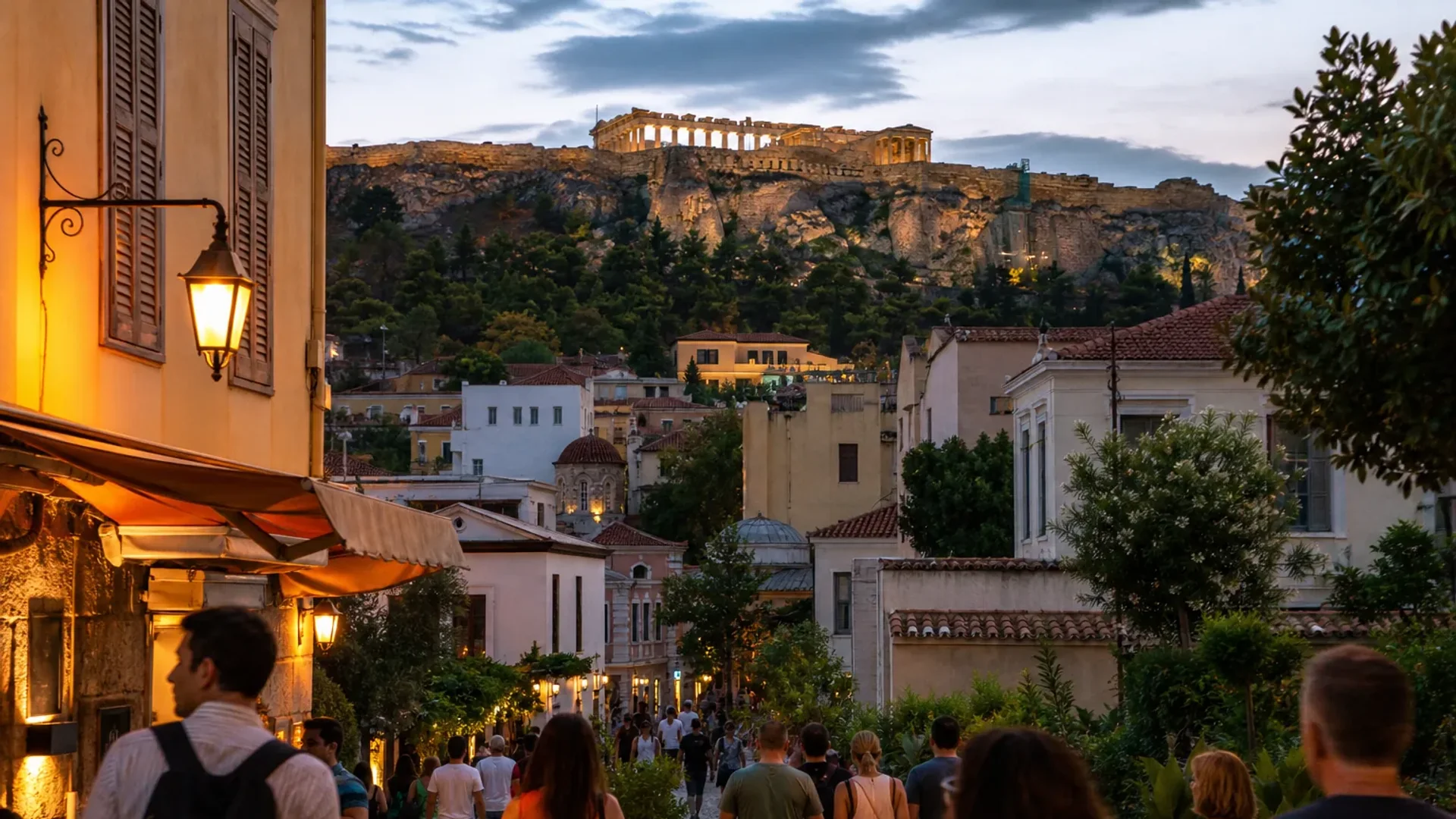
A seven-day Greece itinerary can feel generous until ferry days start eating your mornings. We recommend two nights in Athens, one main island base, and one flexible island finish. That gives you ancient sites, beaches, village life, and room for weather delays without turning the trip into a port-hopping contest.
The approach is simple: plan the parts that can break, then leave space for the parts you’ll remember.
A strong Greece itinerary starts with Athens because your arrival day needs less pressure than you think. Most international flights land at Athens International Airport, and the city gives you a useful soft landing before the islands.
Choose a base near Syntagma, Plaka, Koukaki, or Monastiraki. These areas keep your first evening simple. You can reach dinner on foot, see the Acropolis above the city, and avoid adding a taxi ride after a long flight.
If you arrive in daylight, walk the pedestrian loop around the Acropolis. Anafiotika adds a small village feel beneath the hill. Then stop for dinner in Psyrri or Koukaki. Souvlaki and meze are enough for night one. You don’t need a grand restaurant after an overnight flight.
If you land late, skip the sightseeing. Check in, drink water, and sleep. A missed sunset costs less than a bad start to the whole week.
For airport transport, public transportation to Syntagma or Monastiraki takes roughly 40 to 45 minutes, based on the route details in the researched planning material. A daytime taxi to central Athens is listed at €43. Check the current fare before you leave, since transport prices can change.
We also suggest checking the Acropolis of Athens before your trip so you know which site you are visiting and how it fits into the city. It helps you spend your limited time with a clear plan instead of wandering between ticket gates.
Book your Acropolis entry for the first available morning slot on day two. Summer heat builds quickly, and the hill is much harder once the day gets hot. Keep your first afternoon light, especially if you plan to take a ferry the next morning.
Put this decision first because arrival fatigue is easy to ignore on a screen. On the ground, it decides whether day two feels calm or like a race.
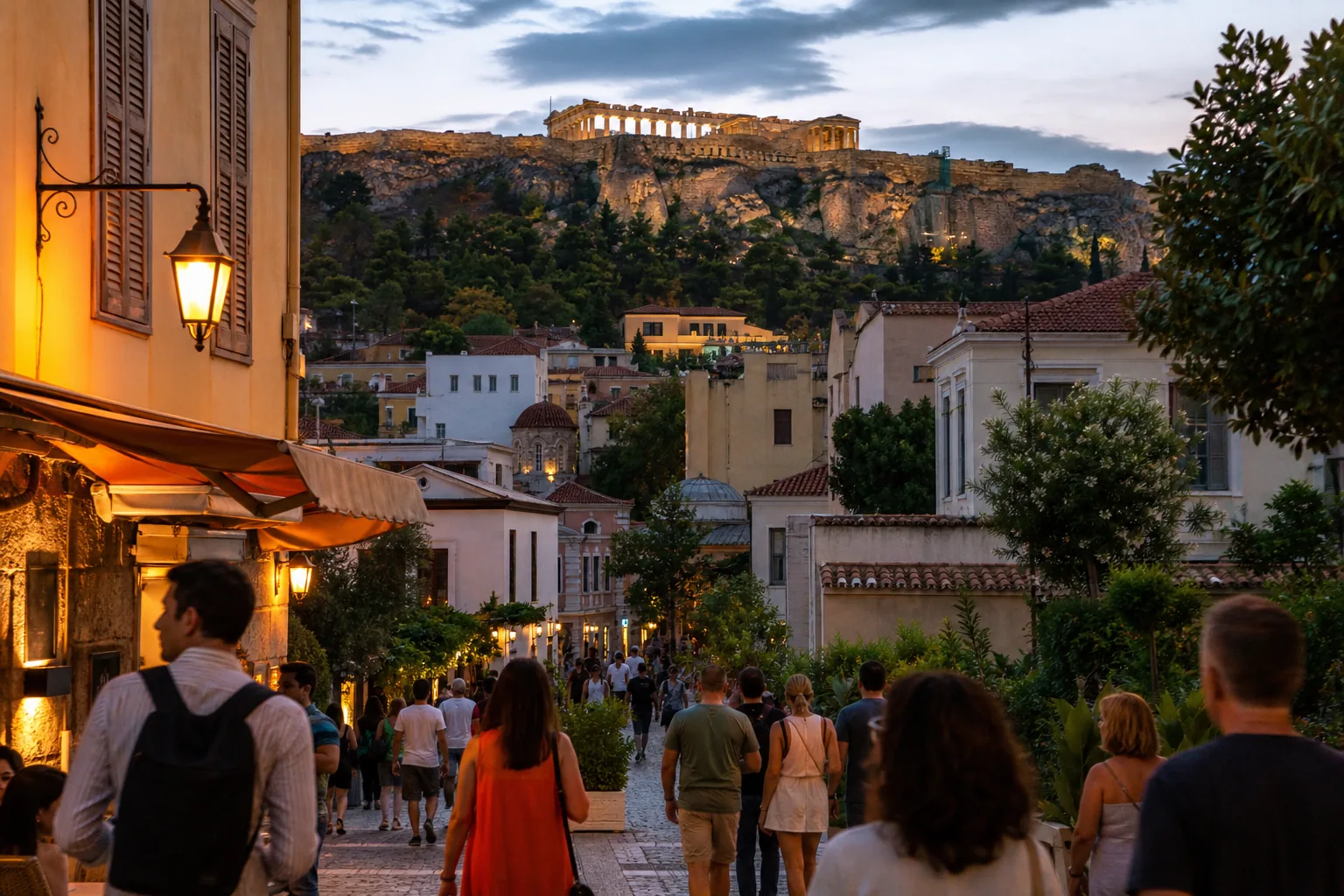
A full Athens day gives your Greece itinerary a better balance. Start at the Acropolis around opening time, then move downhill through the historic center instead of crossing the city several times.
Allow about two to two and a half hours for the Acropolis itself. If you want the Acropolis Museum too, reserve more time. The hill includes the Parthenon and the Erechtheion, while the museum gives you a cooler place to understand what you saw.
Afterward, walk along the pedestrian route below the Acropolis. Pick one follow-up site, not three. The Acropolis Museum works well if you want sculptures and context. The Ancient Agora suits you if you’d rather stay outdoors and see the Temple of Hephaestus.
Take a proper lunch after the morning sites. Then slow down. A coffee in a shaded arcade or a rest at your room can save the afternoon. Athens in summer is tiring, and forcing yourself through heat does not make the day more valuable.
For the second half, choose one neighborhood route:
We would skip trying to fit another hilltop viewpoint, the National Garden, a major stadium, the Ancient Agora, and the Acropolis Museum into one day. Each is worth time. Together, they turn Athens into a checklist.
Before dinner, confirm your ferry ticket, departure port, boarding time, and luggage plan. Piraeus is the usual port for routes toward Naxos, but other ports can matter when schedules change. Check the port shown on your booking rather than relying on a map pin.
Keep dinner close to your room. You may need to leave early for the ferry, and the port is not the place to discover that your bag has become too heavy.
Athens deserves more than a transit stop. The principle for city trips with a tight daily route is simple: group sights by area and protect time for meals and rest.
The island section is where a Greece itinerary either settles into a rhythm or falls apart. For seven days, we recommend one anchor island and one short finish. Naxos works well as the anchor because it combines beaches, villages, food, and ferry links.
The researched routes show a clear pattern. Ferries appear often, but the guides give much less cost detail than route detail. That is the planning gap you need to fill yourself. Before booking, check each leg’s time, price, port, and backup plan.
| Route shape | Good fit for | What you gain | What you give up |
|---|---|---|---|
| Athens, Naxos, Athens | First trip with a slower pace | One full island base and a simpler departure | Less island variety |
| Athens, Naxos, Folegandros, Athens or Santorini | Travelers who want a second island mood | Villages, beaches, and a quieter finish | More ferry risk and less free time |
| Athens, Santorini, Mykonos | Travelers focused on famous sights | Caldera views, nightlife, and major landmarks | Higher costs and more transfer pressure |
| Athens, Paros, Naxos | Travelers who want two connected island bases | More choice in beaches and evening towns | Extra packing and ferry time |
Naxos is the sensible anchor for many travelers. Spend day three arriving, swimming, and finding the Portara before sunset. Give day four to the island itself. You can drive through Halki, Filoti, and Apeiranthos, then return toward Agios Prokopios, Plaka, or Mikri Vigla for a swim.
For the second island, choose based on the schedule you can actually book. Folegandros gives you a cliffside Chora and a quieter evening feel. The Small Cyclades can work when you prefer easy walks and less movement. Santorini makes sense when the airport helps your departure or the caldera is a firm priority.
Don’t add Mykonos, Santorini, Naxos, Paros, and Folegandros because they look close on a map. A ferry connection includes checkout, getting to the port, waiting, boarding, arrival, and finding your next room. The boat ride is only one part of the day.
The Cyclades include many islands with different transport links and terrain. That simple fact explains why a route that looks smooth online can feel tiring in person.
Fast ferries can save time, but conventional ferries may cost less and feel steadier in rough conditions. Check current schedules before committing. Wind can change the plan, especially on smaller boats.
Our rule is firm: if the second island requires a tight connection, skip it. A calm day on Naxos beats a second island reached after a chain of delays.
A useful island day has one main aim. Build your Greece itinerary around a walkable base, then choose one excursion that gives you something your base cannot.
On Naxos, stay in Chora if you want evening meals within walking distance. Choose Agios Prokopios or Agia Anna if the beach is your main reason for coming. A village base can work if you plan to rent a car.
Day three should stay easy. Arrive by ferry, leave your luggage, swim if the weather allows, and walk to the Portara for sunset. Eat near your room. You have not wasted the day. You have avoided turning arrival into another work shift.
Use day four for the island’s interior. A rental car lets you reach Halki, Filoti, and Apeiranthos, where the pace feels different from the beach strip. Plan an inland lunch with local cheeses and kitron. Then return to the west coast for a swim at Agios Prokopios, Plaka, or Mikri Vigla.
A car is useful for that route, but it is not required for every Naxos plan. If you want beaches and Chora, buses and short taxi rides may be enough. Don’t rent a car simply because an itinerary says you should. Rent one when it opens a route you actually want.
On Folegandros, keep the pattern even simpler. Walk through Chora, visit Kastro, and go to Panagia for sunset. A separate day can include Agali or Katergo, but leave room for wind and energy. If the sea is rough, stay on land and use the village as the main event.
One excursion is enough for a seven-day trip. A second boat trip may sound appealing, but it adds another fixed departure to a week that already depends on ferries.
Write a short daily brief before you book: base, one anchor activity, meal area, and fallback. That small note makes it easier to change plans without losing the day.

Key Takeaway: Use one island as your base, then add one excursion that changes the view without changing hotels.
Your final travel day should be boring on purpose. A safe Greece itinerary leaves room between the last ferry and your international flight, especially when you must cross from an island to Athens.
If your flight leaves early, sleep in Athens the night before. If it leaves late, a final island morning may work, but keep the plan close to your room and port. Don’t schedule a remote beach, a long lunch, and a ferry connection on the same morning.
For a mid-range trip, the total cost of a one-week Greece itinerary before international flights varies with the island, season, room type, and activities. A comfortable seven-day route also depends on those choices and should be treated as a planning estimate rather than a quote.
Use euros for your working budget and convert to dollars on the day you book. Exchange rates move, so a fixed dollar figure can mislead you. Keep a separate transit line in your notes.
Accommodation usually makes the largest difference. The researched figures put mid-range rooms on Santorini and Mykonos well above similar rooms on Naxos and Paros during peak summer. If you want to save, reduce island changes before cutting every meal.
Also budget for the mandatory nightly climate resilience fee. The fee varies by property class and season. Confirm the amount at booking or checkout.
Ferry prices change with route, speed, date, and seat type. Treat the figures above as a starting point. Once your dates are firm, book the key legs and keep a small buffer for port transfers, snacks, and a last-minute taxi.
You can turn this framework into a day-by-day plan with fewer decisions. The point is not to add more stops. It is to make the stops you choose work together.
Seven days is enough for Athens plus one main island and a short second stop. A Greece itinerary that includes Athens, Santorini, Mykonos, Crete, and Naxos will spend too much time in transit. Keep two nights for Athens, then protect at least two full days on your main island.
Naxos is an easy fit for a first Greece itinerary because it combines beaches, villages, food, and transport links. You can stay in Chora without a car, or rent one for the interior. It also gives you more room to slow down than a route built around several famous islands.
Two days in Santorini can work if the caldera is your main reason for going. It is less useful when the visit forces a tight ferry connection before an international flight. Add Santorini when its airport or views solve a clear planning need, not because every Greece itinerary has to include it.
Two islands plus Athens is the sensible limit for most travelers. Three islands can fit on paper, but a Greece itinerary also needs hotel checkout time, port transfers, ferry waits, and weather margin. If one connection looks tight, remove an island rather than hoping every boat runs perfectly.
The cost of a seven-day Greece itinerary varies by island choice, season, accommodation, and transport, before international flights. Your island choice matters more than small daily savings. Santorini and Mykonos in peak summer push costs up, while Naxos and Paros can give you more room.
We recommend two nights in Athens, three nights on Naxos, and a flexible final island only when the ferry schedule behaves. Set your route around your departure flight, check current ferry times, and write down a backup for every major transfer. That is the kind of planning that works: enough structure to protect your time, with enough space to enjoy the place you came to see.
Find the best travel apps for flights, bookings, itineraries, transit, and travel days, with honest trade-offs and clear recommendations.
Use these travel planning tips to set a realistic budget, choose the right pace, book smarter, and build an itinerary you will enjoy.
Hostel vs hotel for solo female travelers: real price figures, safety comparison, and Maren's honest recommendation including the private hostel room option.