Travel Apps: What to Use for Every Trip
Find the best travel apps for flights, bookings, itineraries, transit, and travel days, with honest trade-offs and clear recommendations.
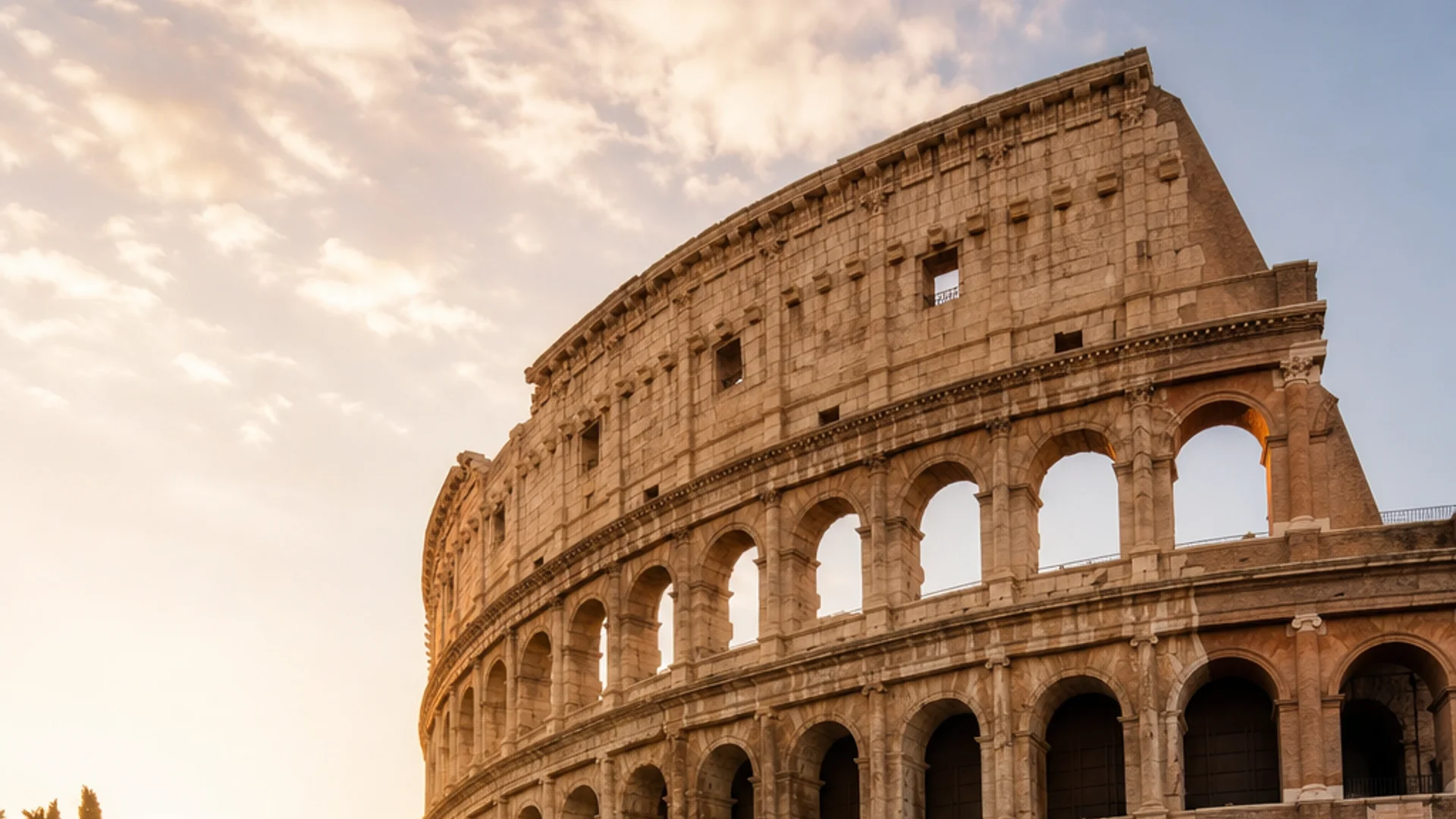
Ten days in Italy sounds like plenty of time until you’re standing in a Rome hotel lobby on day seven realizing you spent three hours on a train you didn’t need to take. We’ve built this guide to prevent exactly that. What follows is a day-by-day plan with real transport times, honest costs, and the frank verdict on what most itineraries quietly skip telling you.
Everyone argues about the order. And when you look at how other travel guides approach it, the disagreement is real: some pack ten cities into ten days, others plant you in three cities and barely move. Neither extreme is right for most travelers.
We looked at two popular approaches side by side. One rushes from Palermo to Bassano del Grappa with a new city every day. The other spends three consecutive days in Rome, two in Florence, two in Venice, and fills remaining days with day trips to Tivoli and the Siena/Chianti region. The second approach wins for first-timers. Constant city-hopping sounds exciting until you’re spending two to four hours per move and arriving too tired to actually see anything.
Rome is the anchor. When we analyzed the day-entry spread across common itinerary formats, Rome appeared in roughly 26% of all city mentions , more than any other destination. That’s not inflated hype; it’s a reflection of how much is actually there. You need at least three days just to not feel rushed.
Here’s the structure we recommend for a first Italy trip:
This keeps inter-city moves to four, gives you real time in each place, and ends in Venice , which works beautifully as a final-night city because it doesn’t need a full day to feel worth it. If you’ve already done this classic loop and want to rethink it, the alternatives section below has real options worth considering.
Key Takeaway: Three days in Rome, two in Florence, two in Cinque Terre, and a Venice finale is the most efficient first-timer structure , anything faster sacrifices depth for distance.
This breakdown assumes you fly into Rome’s main international airport and out of Venice Marco Polo Airport (VCE). That single-direction route cuts backtracking entirely.
Day 1 , Land, take the dedicated airport express train into the city center, check in, and keep it light. Walk to the Trevi Fountain and the Spanish Steps in the evening. The Trastevere neighborhood across the Tiber is your best bet for dinner: the streets are narrow, the prices are honest, and it feels like the city slows down there.
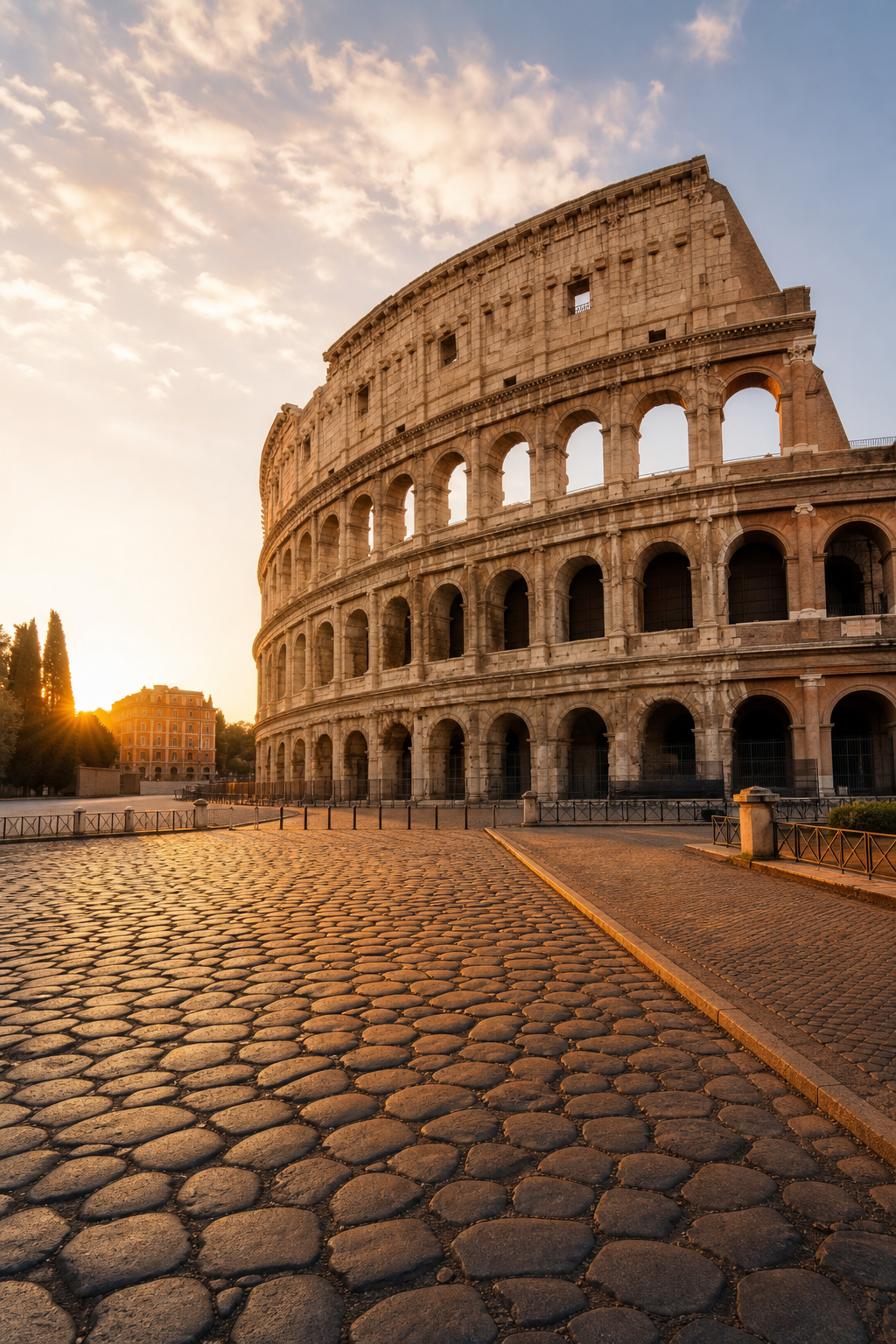
Day 2 , The Colosseum, Roman Forum, and Palatine Hill. One ticket covers all three. Book online before you go , the walk-up line can run two hours. Budget a full morning. The Altar of the Fatherland and the Pantheon are a short walk away and worth the afternoon. The Pantheon, one of the best-preserved buildings of ancient Rome, is free to enter and genuinely one of the most impressive interior spaces in Europe.
Day 3 , Vatican City. Start early with the Vatican Museums and the Sistine Chapel (book tickets in advance , lines here are brutal). Plan three hours minimum. Afternoon: St. Peter’s Basilica and the climb to the dome for the best improved view in Rome. Finish at Castel Sant’Angelo before dinner.
A high-speed train from Rome’s central station to Florence’s main station takes about 1.5 hours. Book in advance. Arrive in Florence by noon, drop your bags, and spend the afternoon at the Duomo complex and the Ponte Vecchio. The Piazzale Michelangelo at sunset is worth the short uphill walk , the panoramic view over the city is one you’ll remember.
Day 5 , Uffizi Gallery or Accademia Gallery (home to Michelangelo’s David). You need tickets booked ahead for both. Pick one per day; trying both in a single day is exhausting. The covered market near San Lorenzo is the right lunch stop , browse the ground floor for produce and cheese, eat at one of the stalls upstairs.
Day 6 , Day trip. Siena is 1.5 hours by bus or train from Florence, and its medieval center around the Piazza del Campo is one of the most beautiful public squares in Italy. A Tuscan wine tour of the Chianti region is the other strong option if you want the countryside and a proper meal. The Boboli Gardens make a good morning if you’d rather stay in the city.
Take the train from Florence’s main station toward La Spezia (about 2.5 hours), then switch to the regional train into the five villages. A local transit card covering unlimited train travel between the villages and trail access is available at the station or online before you leave.
Day 8 , Get oriented without overdoing it. Start at Riomaggiore, walk or take the train to Manarola (five minutes), then end at Vernazza , the village with the best harbor. Two villages plus a late afternoon in a third is plenty for one day.
Day 9 , Corniglia requires climbing 382 steps from the train station, so come rested. Monterosso al Mare is the largest village and has the best swimming beach if the weather holds. If you want to hike between villages, pick one trail segment rather than attempting the full route, which takes five or more hours.
This is the longest train ride of the trip , roughly four hours from La Spezia to Venice’s main train station. Book early for better pricing. Arrive in Venice by early evening, drop your bags, and walk to the Rialto Bridge at dusk. The city at night, when most day-trippers are gone, is a different experience entirely.
Italy’s high-speed rail network is genuinely good. High-speed trains connect Rome, Florence, and Venice efficiently, and booking in advance , up to 120 days out , can cut ticket prices by 50, 70% compared to buying day-of. The earlier you book, the better the price. This is the single most impactful money-saving move for inter-city travel in Italy.
One thing most itineraries don’t say clearly: a rail pass rarely makes financial sense for a 10-day trip. If your route is Rome → Florence → Cinque Terre → Venice, you’re making four inter-city moves. Point-to-point advance tickets booked through the official rail booking site will almost always beat the pass price, and you avoid the reservation fees that apply to high-speed trains even with a pass.
Regional trains (the slow trains that get you into Cinque Terre) have fixed prices regardless of when you book. No strategy needed there , buy them the day before or the morning of.
On airports: fly into Rome and out of Venice Marco Polo Airport (VCE). That’s the cleanest routing for this itinerary. From VCE, the airport bus to Venice’s Piazzale Roma bus terminal takes around 25 minutes. From there, it’s a five-minute walk to the train station and the Grand Canal water buses.
A note on travel time honesty: plenty of published itineraries list transit between cities as “just over 2 hours” or “less than an hour” when actual journey times , with connections , run considerably longer. Always check the actual scheduled time on the official rail booking site before committing to a day’s plan, and build in buffer time, especially if you’re connecting to a regional train like the one into Cinque Terre.
Pro Tip: Use a flight price alert tool for Rome as your arrival city and Venice as your return , the open-jaw routing is well-served and often priced competitively against round-trips into a single city.
Here’s what a mid-range 10-day Italy trip actually costs per person, excluding international flights. These are realistic working figures, not best-case scenarios.
| Category | Budget Traveler (per day) | Mid-Range (per day) | Notes |
|---|---|---|---|
| Accommodation | $50–80 | Pricing varies by season and city | Hostels vs. 3-star hotels; Venice and Rome skew higher |
| Food | $30–50 | $60–100 | Trattorias, markets, one nicer dinner per city |
| Local transport | $5–10 | $10–20 | Metro, buses, vaporetto in Venice |
| Attractions | $15–25 | $25–45 | Colosseum, Vatican, Uffizi all require paid entry |
| Inter-city trains | Pricing varies; book in advance for best rates | Book in advance; prices vary widely |
For 10 days, budget travelers can expect costs to vary significantly depending on travel style (excluding flights and inter-city trains). Mid-range travel — the comfortable tier most of our readers are aiming for — runs higher, and the all-in cost for a mid-range 10-day trip, including international flights from the US, will depend on when and how far in advance you book.
A few costs that trip people up: Vatican Museum tickets run about €20–25 per person. The Uffizi Gallery is similar. The Colosseum complex (which includes the Roman Forum and Palatine Hill) is around €16 standard entry. None of these are optional if you’re doing the classic route — budget for all of them upfront. City pass options exist for Rome and other cities, but do the math for your specific plans before buying; they only pay off if you’re hitting enough paid sites in a tight window.
Venice is the most expensive city on this route. A one-day vaporetto pass costs around €25. A single gondola ride runs €80–90 for a shared 30-minute experience (private rides are significantly more). Eat away from St. Mark’s Square and the Grand Canal — prices drop noticeably two streets back.
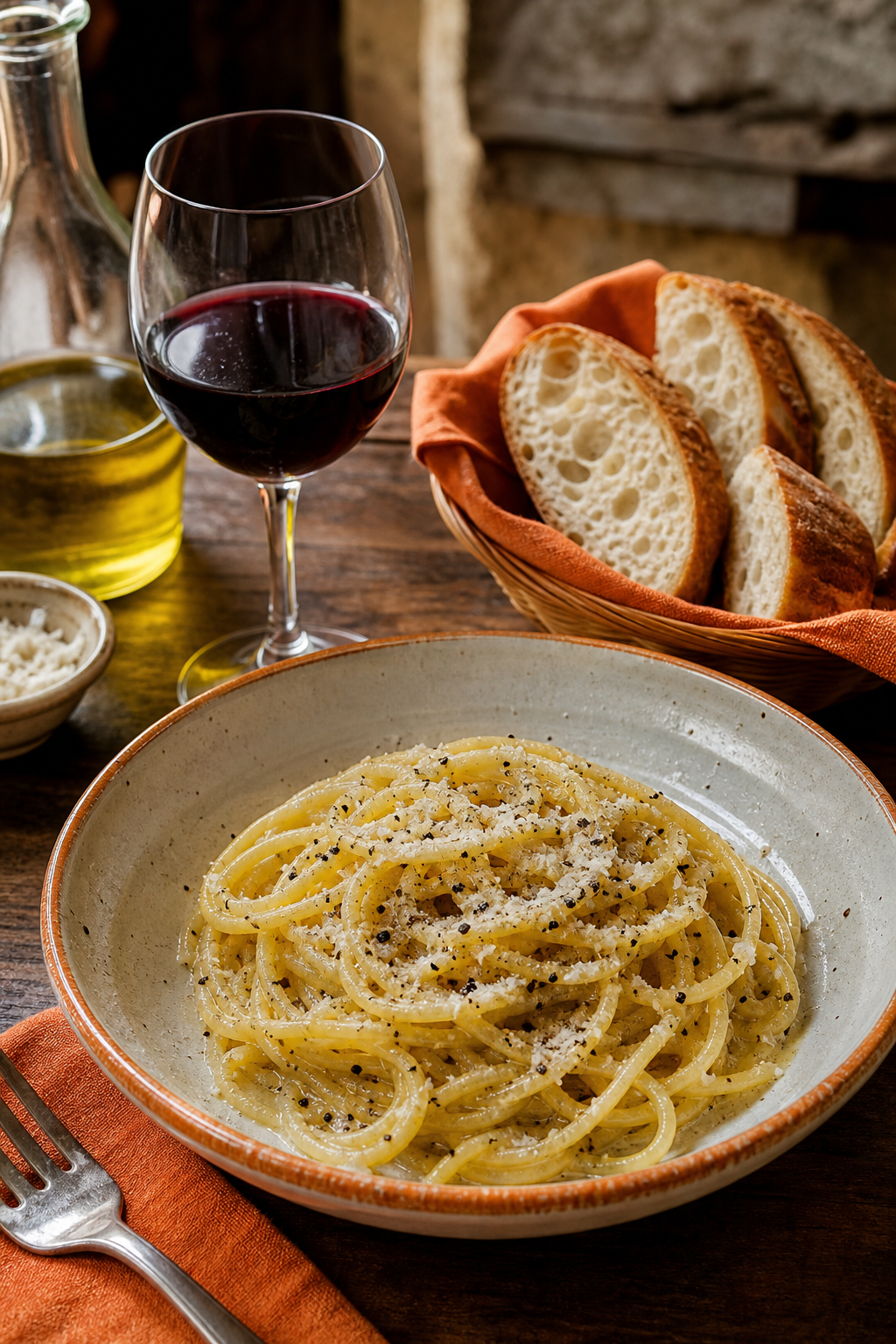
Food in Italy is genuinely regional. What you eat in Rome is not what you eat in Florence, and eating the right thing in the right city is one of the real pleasures of moving through the country this way.
Roman pasta is built on fat and simplicity. Cacio e pepe(pecorino and black pepper), carbonara(egg, guanciale, pecorino , no cream), and amatriciana(guanciale, tomato, pecorino) are the three dishes worth repeating. Order them in trattorias, not tourist-facing restaurants near the major sights. The suppli , fried rice balls with mozzarella , are the street food to chase, typically found at pizza al taglio spots.
Tuscany is meat, bread, and wine. The bistecca alla Fiorentina is a thick T-bone grilled over wood coals and served rare , it’s sold by weight and is not cheap, but it’s worth ordering once. The bread here is famously unsalted, which takes getting used to but works with the salty cured meats. Florence’s central market has one of the best selections of regional cheese and salumi in the country. Chianti Classico is the local red worth drinking with dinner.
For the Emilia-Romagna day trip from Florence that some travelers add, the region around Modena is where Parmigiano-Reggiano and aged balsamic vinegar are actually produced. A factory visit to see how the cheese is made is a genuinely interesting afternoon, and the tastings are the real thing. On a 10-day Italy itinerary, this is an optional detour , but a good one for food-focused travelers.
Fresh seafood. The villages are small fishing communities, and the catch is local. Look for seafood sandwiches and pesto on trofie pasta , Liguria is where pesto originated, and the basil grown in the coastal microclimate is different from anything you’ll find elsewhere. Focaccia di Recco (a thin, cheese-stuffed flatbread) is worth finding. Watch out for seagulls if you’re eating outside.
Venice’s food culture runs on cicchetti , small plates served at bars called bacari. Think crostini topped with salt cod, fried artichokes, hard-boiled eggs with anchovies. One cicchetti crawl through the Cannaregio or Castello neighborhoods is more interesting than most sit-down restaurant meals in Venice and considerably cheaper. The local wine is Prosecco(served simply as a spritz with Aperol or Campari) and light whites from the Veneto.
Pro Tip: In cities like Rome and Milan, ordering a drink during aperitivo hour (roughly 6, 8pm) often gives you access to a generous buffet spread for €10, 15 , a legitimate dinner substitute that most tourists completely miss.
The Rome-Florence-Cinque Terre-Venice loop is excellent for first trips. If you’ve done it and want something different, these are the regions worth serious consideration , not as vague suggestions, but as genuine alternatives with a different character.
Puglia , The heel of the boot is dramatically different from central and northern Italy. Whitewashed towns, trulli (the conical stone houses found across the region), and a coastline that’s far less crowded than the Amalfi Coast. Prices are lower, and the food culture , orecchiette pasta, burrata, grilled fish , is distinct. Bari is the main transport hub. Worth it if you want a slower, less tourist-dense pace.
The Dolomites , Northern Italy’s alpine terrain, dramatic rock spires, and summer hiking trails are unlike anything else in the country. Alpine resort towns and valley bases are the main entry points. Having a car here is a genuine advantage; the scenery between towns is part of the experience. For adventure travelers who want something beyond the city circuit, this is the best Italy swap. If you’re interested in off-road touring through the alpine valleys, guided ATV tour and vehicle rental operators offer routes suited to mountain terrain.
Umbria , Often called Tuscany without the crowds (and with lower prices). Perugia, Assisi, and Orvieto are the anchor towns. The landscape is gentler than Tuscany, the hill towns are genuinely quiet, and the truffle season in autumn makes it one of the best food destinations in Italy. Accessible by train from Rome in under two hours.
Sicily , Far enough from the mainland that it genuinely feels like a different country. Palermo, the ancient temple complexes of the interior, and the coastline around Taormina are the highlights. Budget an extra travel day each way, and be realistic about the distances between sites. Sicily works better as a standalone trip than as a bolt-on to a 10-day mainland route.
May and September are the best months. The weather is good across the whole route, crowds are lower than peak summer, and accommodation prices are meaningfully cheaper than July and August. June is still very manageable. July and August are hot , particularly in Rome , and Cinque Terre gets overwhelmed with day-trippers. If you go in peak summer, start every major attraction at opening time. The difference between 8am and 10am at the Colosseum is a 45-minute queue.
November through February offers the lowest prices, but coastal areas like Cinque Terre have limited services in winter, and the weather can be rainy and cold. Late January to mid-March is the best value window if you’re flexible and primarily focused on city-based history and culture.
Italy has a wider range of accommodation types than most travelers realize. The familiar hotel and Airbnb options are there, but the country also has genuine alternatives worth knowing about.
An agriturismo , a working farmhouse or rural estate that takes guests , is one of the best Italy-specific lodging experiences. Meals use ingredients from the property. They’re most usable as a base for Tuscany day trips rather than for city nights. In southern Italy, a masseria(a fortified rural estate, common in Puglia) offers something similar. Both tend to be quieter, more personal, and often better value than city hotels at comparable quality levels.
For city stays on this itinerary: in Rome, a location 2, 3 metro stops from the historic center cuts accommodation costs noticeably without adding significant travel time. In Florence, a hotel within walking distance of the Duomo means you won’t need transit at all. In Venice, anywhere that doesn’t require a water taxi from your accommodation to the main islands is a win , stay on the main island if your budget allows, or near the Mestre train station on the mainland for a cheaper base.
Skip the hop-on hop-off buses in Rome and Florence. They’re slow, expensive relative to what they deliver, and you’ll see more walking. Skip the gondola ride in Venice unless you genuinely want it , a traghetto (the standing gondola ferry that crosses the Grand Canal for €2) gives you the gondola experience at 1/40th the price. Skip any restaurant with photos of food on the menu within 100 meters of a major tourist site; the quality-to-price ratio drops sharply in those zones.
When it comes to jewelry and valuables, pickpocketing is real in crowded tourist areas, particularly at the Trevi Fountain and on Rome’s metro. Keep important items secure. A compact travel jewelry organizer is worth packing if you’re bringing anything you’d miss; look for one with individual compartments, a secure clasp, and a slim profile that fits inside a carry-on without adding bulk.
Finally: don’t try to do the Amalfi Coast as a day trip from Rome or Naples and still make Florence the next day. It requires either an overnight or a full dedicated travel day to do properly. Either build it in or leave it for another trip , it’s worth the time when given properly.
Ten days is enough to see the main highlights well if you focus on three or four destinations rather than trying to cover the whole country. A Rome-Florence-Cinque Terre-Venice route gives you real time in each place. You won’t see everything Italy offers , Sicily, Puglia, the Dolomites, and the Amalfi Coast all deserve separate trips , but you’ll leave with a solid foundation and plenty of reasons to come back.
Fly into Rome and out of Venice. That single-direction routing means you’re never backtracking, which saves two to four hours of travel per repeated move. Rome first gives you the biggest city when you’re freshest. Florence in the middle is manageable after Rome. Cinque Terre and Venice at the end are lower-intensity, which suits the natural pace drop of a trip’s final days.
Daily costs vary depending on your travel style and the season. Budget travelers will spend less per day than mid-range travelers, who in turn spend less than those choosing luxury accommodation and dining. Booking inter-city trains in advance cuts transport costs significantly. For a reliable estimate tailored to your specific plans, pricing varies by season and availability.
Yes, for the major sites. The Colosseum, the Vatican Museums, the Uffizi Gallery, and the Accademia Gallery in Florence all have long lines and sell out on popular dates. Book these before you leave home. Most allow booking 30, 60 days in advance. Same-day or next-day availability exists but isn’t reliable in summer. Missing a Vatican entry because of a sold-out ticket is a real and common problem.
Probably not. A pass makes more financial sense for travelers crossing multiple countries. For a single-country 10-day Italy itinerary with four or five inter-city moves, point-to-point advance tickets booked directly through the official rail booking sites typically cost less than a pass , and high-speed trains require a reservation fee even with a pass. Do the math for your specific route before buying.
The hop-on hop-off buses in major cities are slow and expensive. Gondola rides in Venice are fun but extremely overpriced , consider the €2 traghetto crossing instead. Any restaurant within eyesight of the Trevi Fountain or the Colosseum will charge tourist prices for average food. Moving too fast between cities is the biggest mistake: seeing seven cities in ten days means you’re seeing airports and train stations more than the cities themselves.
Ten days done right , focused, paced, with real time in each city , is one of the best possible introductions to Italy. The classic route through Rome, Florence, Cinque Terre, and Venice holds up because it’s genuinely excellent, not because travel blogs keep recommending it. Our recommendation is simple: book the trains before you book the hotels, prioritize advance tickets for the Vatican and Colosseum, and resist the urge to add one more city.
Find the best travel apps for flights, bookings, itineraries, transit, and travel days, with honest trade-offs and clear recommendations.
Use these travel planning tips to set a realistic budget, choose the right pace, book smarter, and build an itinerary you will enjoy.
Hostel vs hotel for solo female travelers: real price figures, safety comparison, and Maren's honest recommendation including the private hostel room option.