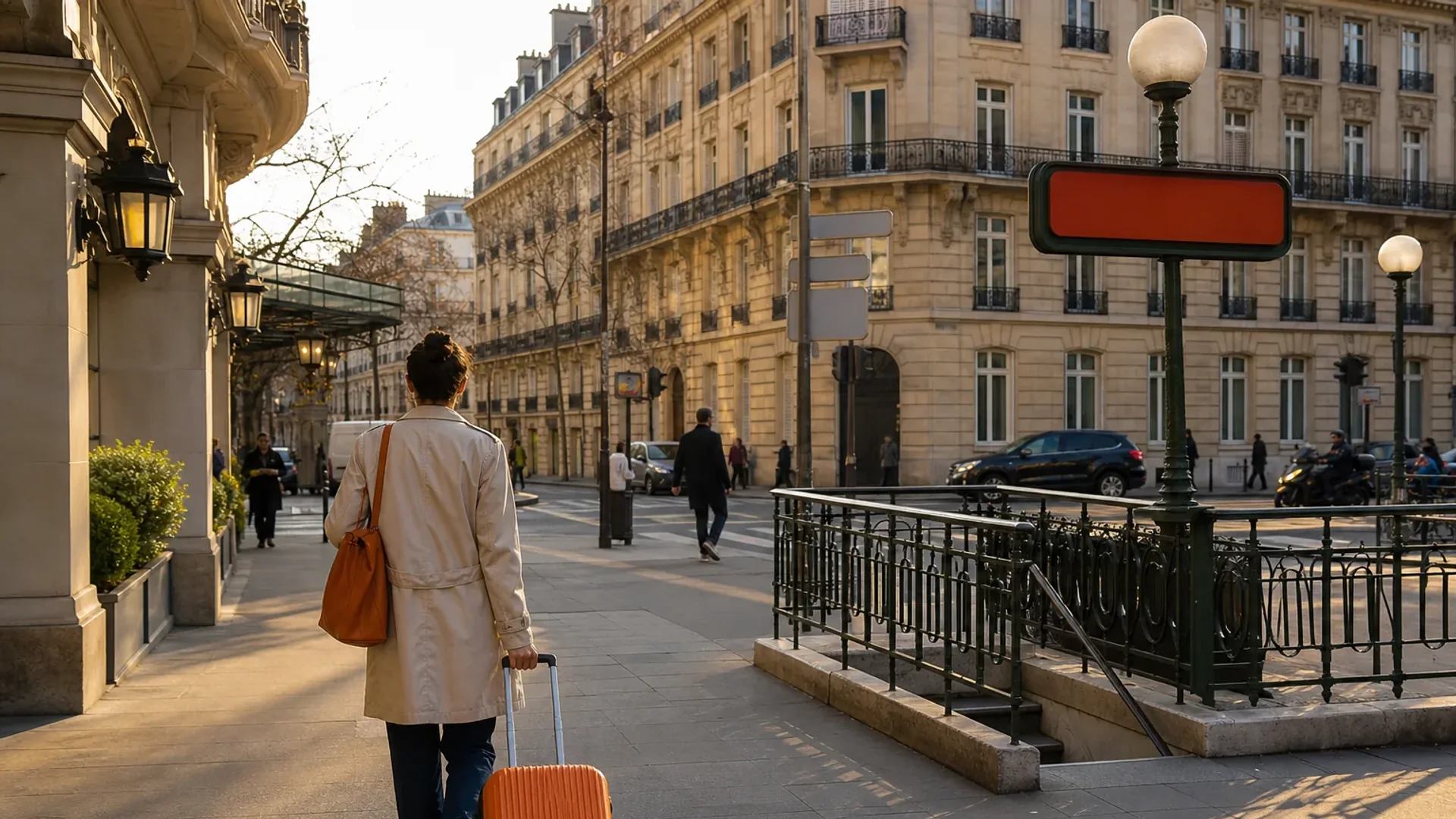
Four days in Paris is enough for the major sights, but only if you stop zigzagging across the city. We group each day by area, leave room for a slow meal, and tell you what to skip when the crowds win. This Paris itinerary 4 days plan is built for first-time visitors who want famous places without turning the trip into a timed obstacle course.
Step 1: Set Your Paris Base and Arrival Plan
A workable Paris itinerary 4 days plan starts with your hotel area, not your first museum. Stay near a Metro station in the 1st arrondissement, Le Marais, Saint-Germain-des-Prés, or the Latin Quarter. These areas keep several major sights within a manageable walk.
We prefer a central base because changing hotels wastes time. The 1st arrondissement makes the Louvre and Île de la Cité easy. Le Marais gives you lively streets and food stops after sightseeing. Saint-Germain puts you close to the Left Bank and Luxembourg Gardens.
If you want a room with a famous view, check the details before paying. A listing may say “Eiffel Tower area” without promising a direct view. Our guide to Paris hotels with Eiffel Tower views explains what to confirm, including the room category and angle of the view.
Arriving at the airport? The airport train connects the airport with central stations. Fares vary, with trains running roughly every 10 to 20 minutes on weekdays. The ride takes about 25 minutes to a central station and about 40 minutes to another central connection. Check current airport transit guidance before leaving, since works can affect service in 2026.
Drop your bags if your room isn’t ready. Then keep your first afternoon light. A short walk near your base beats crossing Paris while jet-lagged and dragging luggage.
Keep your phone in a zipped pocket on busy Metro platforms. Check that a ticket is valid before boarding, especially for regional trains. Also, don’t build your whole trip around Sunday or Monday openings. Some shops, restaurants, and attractions close on those days.
By now you should have: one central base, an airport plan, and a loose first afternoon.
Step 2: Build Day 1 Around Île de la Cité and the Seine
For the first full day of this four-day Paris plan, stay in central Paris. The route links Notre-Dame, Sainte-Chapelle, the Seine, and the Latin Quarter without sending you back and forth.
Start at Île de la Cité. See Notre-Dame from the outside, then walk toward Sainte-Chapelle. The two sites sit about five to ten minutes apart. Sainte-Chapelle can look plain from the courtyard, but the upper chapel changes the mood completely. Its tall stained-glass windows fill the room with color.
Book a timed entry when reservations are required. Give yourself space for security checks. A rushed visit makes the chapel feel like a box to tick, which is a shame.
Afterward, cross the Seine and walk along the Left Bank. Stop for lunch in the Latin Quarter, then continue toward the river. Shakespeare and Company sits near Notre-Dame, but the area gets crowded. Treat it as a short stop rather than a full afternoon plan.
Use this simple route to control the pace:
Time
Area
Decision rule
Morning
Île de la Cité
Book Sainte-Chapelle ahead if your date is busy.
Midday
Latin Quarter
Choose lunch before hunger turns every menu into a good idea.
Afternoon
Seine walk
Keep walking if the weather is mild. Use a café break if it rains.
Evening
River or nearby bistro
Pick one. Don’t add a distant dinner reservation.
A low-effort evening activity is worth considering if you want to keep the evening easy. Check the current schedule and fares, and reserve ahead if you want a preferred time. Eat before the activity if you dislike tourist-style meals.
We’d skip a packed museum on this day. You have already seen a major historic site, crossed the city on foot, and spent time beside the river. Paris rewards restraint.
Decision rule: if your arrival day was tiring, make this a slow central walk. If you feel fresh, add an evening activity.
Step 3: Plan Day 2 for the Louvre, Tuileries, and Le Marais
Day two gives your Paris itinerary 4 days its biggest museum block. Reserve the Louvre before you arrive and set a firm exit time. Three hours is enough for many first visits. Seven hours can turn even a great museum into visual soup.
Enter with a short list. Pick one wing or a small group of rooms before you go. The Louvre has three main wings, and its layout can eat time before you see a single painting. The Mona Lisa is famous, but the crowd around it may not suit you. If the room feels tense, take the photo and leave.
After the museum, exit toward the Tuileries Garden. Sit by the paths, walk toward Place de la Concorde, or stop for a drink. This pause matters because the Louvre is indoor work, even when you’re technically on holiday.
In the afternoon, cross toward Le Marais. Start in a historic square, then walk through the 3rd and 4th arrondissements. The neighborhood has old streets, small shops, museums, and a strong food scene. Marché des Enfants Rouges works well for a casual lunch or late snack, but check opening days before you go.
The Marais also has important Jewish and LGBTQ+ history. Take time to notice memorial plaques and neighborhood markers rather than treating the area as a shopping district. A local history museum is a useful choice if you want more Paris history after the Louvre.
For food, avoid planning three major stops. Choose one market meal, then leave room for a bakery or café. Some falafel spots are popular, but some places close on Saturdays. That small detail can wreck a carefully planned lunch if you don’t check first.
Don’t add Versailles to this day. The train ride and site size deserve their own block.
Skip advice: if you dislike crowds, skip the Mona Lisa queue and spend the saved hour in a quieter Louvre wing or outside in the Tuileries.
Step 4: Use Day 3 for the Eiffel Tower and Saint-Germain
Day three places the Eiffel Tower first, then moves south of the Seine. This keeps the most time-sensitive booking at the start of the day and gives you a relaxed afternoon in Saint-Germain-des-Prés.
Book the tower in advance if you want the top. Review the visitor guidance before choosing a ticket.
Use a viewpoint across from the tower for the classic approach, then cross the nearby bridge. The tower has several access points, and walking to the wrong queue can cost more time than expected. If online tickets are gone, check same-day availability or the on-site ticket office. Don’t pay a stranger near the monument for vague “skip the line” help.
After the tower, walk through a nearby park if your feet feel good. Otherwise, take transit toward Saint-Germain. The neighborhood sits in the 6th arrondissement and has cafés, galleries, bookshops, and small streets that feel easier after a morning in a crowd.
Choose one classic café stop, not every famous café on the boulevard. Popular cafés can have lines. You can get the café experience without making it the day’s main event. A coffee, a short rest, and people-watching are enough.
Continue along a nearby Left Bank street or toward a public garden. If you want a museum, pick one. A museum on this side of town fits the area better than another cross-city trip, but don’t force it after the tower if you’re tired.
One perfect view won’t fix a long daily commute.
By now you should have: your tower visit finished, one Left Bank neighborhood explored, and no urgent booking left for the evening.
Step 5: Choose Between Montmartre and Versailles on Day 4
Your final day needs one clear choice. Pick Montmartre for streets, views, cafés, and a flexible pace. Pick Versailles for a large palace visit that takes most of the day. Trying to do both is how a four-day Paris trip ends in a station.
Choose Montmartre for a city day
Start near a Metro stop below the hill. Walk through the surrounding streets, then climb toward the hilltop viewpoint. The hill is steep, and the cobblestones punish thin shoes. The funicular can save your legs, but stairs are an option if you’re comfortable with the climb.
Walk through the busiest square, then leave the main tourist area. The artists are part of the neighborhood’s identity, but the surrounding restaurants can be tourist-focused. We prefer spending more time on side streets, where you can stop for coffee or a glass of wine without building the day around a photo spot.
Keep your bag close near the hilltop viewpoint. Crowds gather on the steps, and busy viewpoints are where petty theft is easiest. The same rule applies on the Metro: zipped pockets, no phone in a back pocket, and no distracted map reading at the station entrance.
Montmartre is also a good day for the Paris Catacombs if underground history interests you, but don’t combine both unless you accept a rushed schedule. Book the Catacombs separately and check entry times before committing. The site sits far from Montmartre, so the route needs planning.
Choose Versailles for a focused day trip
Versailles makes sense if the palace is a main reason you’re visiting Paris. Reserve the entry time and allow for the regional train journey, security, and a large amount of walking once you arrive. Bring water and plan a meal break rather than assuming you’ll move quickly through the grounds.
Skip Versailles if you want your final day to feel local. Four days already gives you several major monuments. Montmartre leaves more room for weather changes, late starts, and one last bakery stop.
Our recommendation is Montmartre for most first-time visitors who want a calmer final day. Choose Versailles when the palace matters more than flexibility.
FAQ: Planning a Four-Day Paris Trip
Is four days enough for Paris?
Four days is enough for a first visit if you group sights by area. This Paris itinerary 4 days plan covers Île de la Cité, the Louvre, Le Marais, the Eiffel Tower, Saint-Germain, plus either Montmartre or Versailles. You won’t see everything. You will see the major landmarks without spending the whole trip in transit.
What should I book ahead in Paris?
Book the Louvre, Eiffel Tower, Sainte-Chapelle, Versailles, and any fixed-time tour ahead. The Eiffel Tower releases some elevator tickets up to 60 days before a visit. Restaurants near major sights may also need reservations. Leave a few hours open each day so one delay doesn’t break the whole plan.
Should I choose Montmartre or Versailles?
Choose Montmartre for a flexible neighborhood day with cafés, hilltop views, and street walks. Choose Versailles if you care more about palace rooms and formal gardens than free time in Paris. For most first visits, Montmartre fits better because it requires less travel and adapts more easily to weather.
Is the Louvre worth visiting on a short trip?
The Louvre is worth visiting if you set a short route before entering. Spend two to three focused hours rather than trying to cover the entire museum. See the works that matter to you, then leave for the Tuileries or Le Marais. If museums aren’t your thing, it’s reasonable to skip it.
Final Thoughts: What Is Actually Worth Four Days in Paris
Use four days to see the icons, then protect time for ordinary Paris: a café table, a river walk, or a quiet street after the crowds thin. We recommend Montmartre over Versailles unless the palace is a personal priority.
Solo female travel Costa Rica guide: how safe it is as of 2026, San José tips, a first route, bus vs shuttle vs car, and when a small group tour helps.
Verdict: Costa Rica is one of the easiest first solo trips in Latin America. As of November 2026 the US rates it Level 2 for crime, mostly petty theft, so plan San José nights carefully, use shuttles on long hops, and keep valuables close.
Solo female travel Iceland guide: how safe it is, the real risks (weather and roads), when to go, how to get around, and when a small group tour helps.
Verdict: Iceland is one of the easiest countries in the world for a woman to travel alone. The risk is the weather and the roads, not people, so plan around conditions, share your route, and consider a day tour for anything remote.
Scared to travel alone? Name the fear, shrink the trip, plan the first night, and let the nerves ride along. A first-timer's honest guide from Maren.
Verdict: You will not stop being afraid before you go. Shrink the trip, plan the first night, and go scared. The fear gets smaller once you are moving.