Five days in Paris gives you enough time for the famous sights without turning every morning into a race. We built this Paris itinerary 5 days plan around nearby neighborhoods, paid museums, free walks, and one honest choice on the final day.
Our rule is simple: book the time-sensitive sights, then leave room to sit down. Paris is better when the schedule has air in it.
Step 1: Start with the Louvre, Eiffel Tower, and Arc de Triomphe
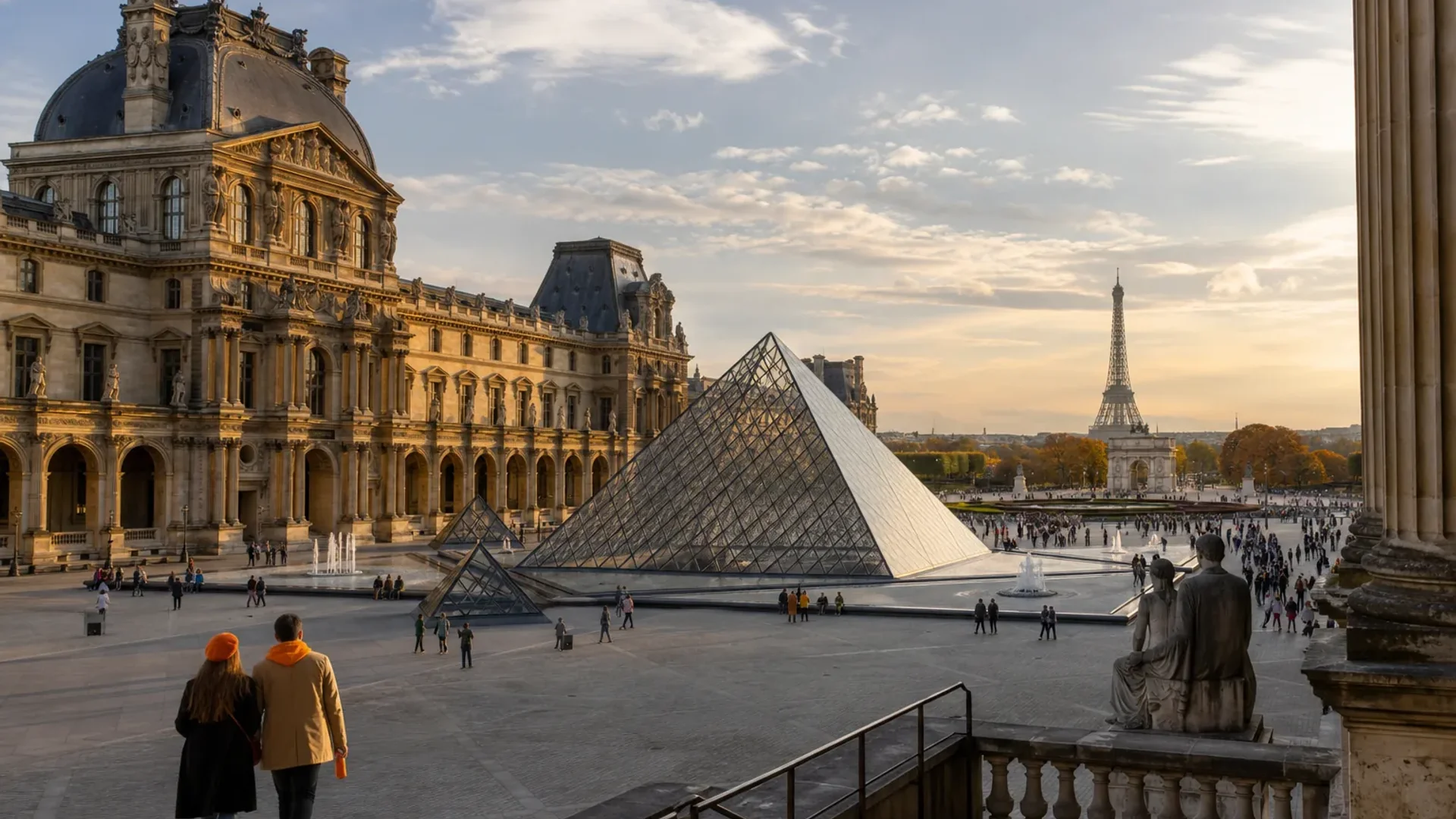
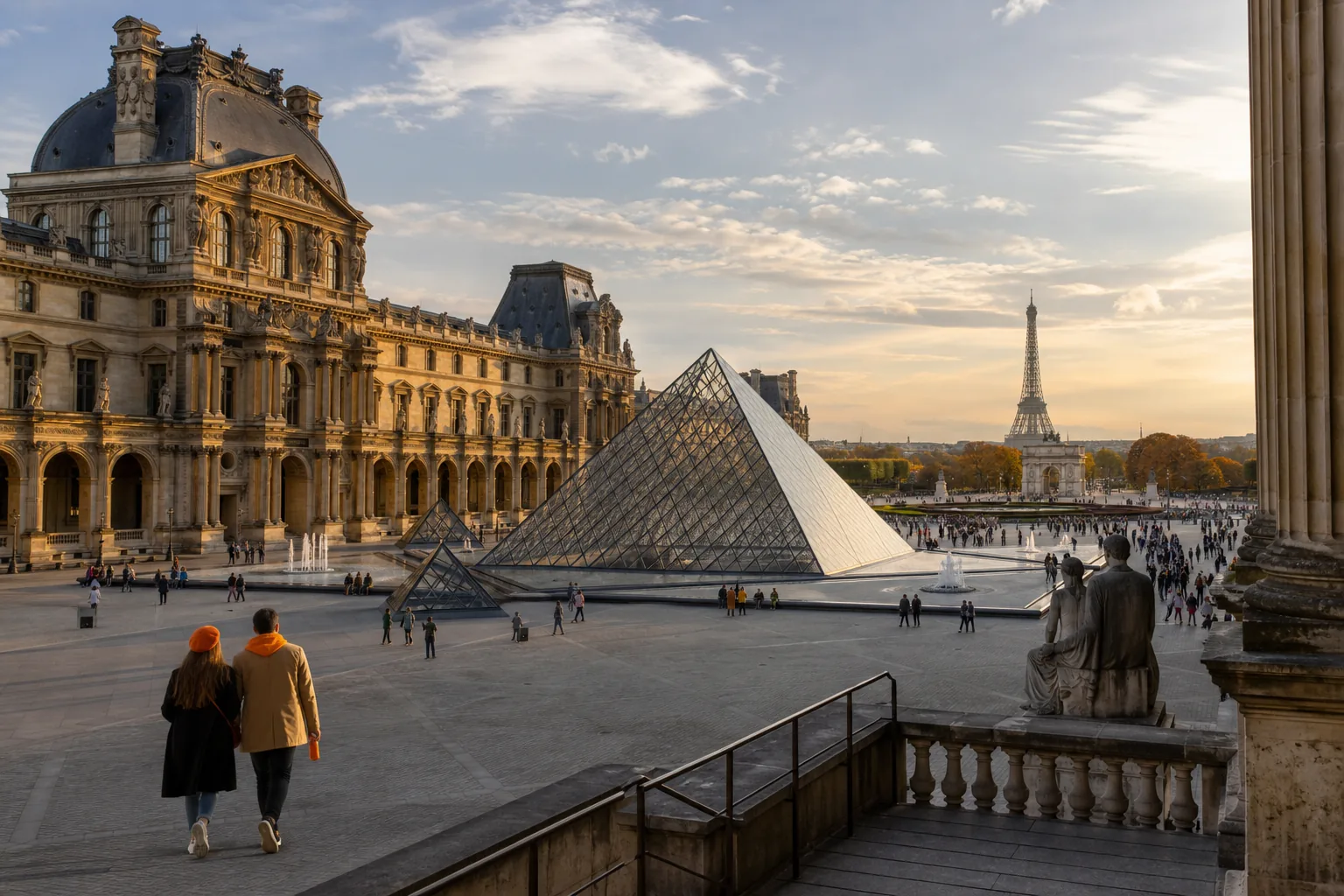
Start your five-day Paris itinerary with the landmarks that need the most planning. Keep this day focused on the Louvre, the Eiffel Tower, and the Arc de Triomphe.
If you arrive in the morning, drop your bags first. Do not build a museum visit around a flight arrival. Delays happen, and the Louvre is a poor place to rush through while watching the clock.
Book a timed Louvre visit for late morning or early afternoon. A focused visit can work in roughly four hours, but only if you choose a short list of rooms before you enter. The Mona Lisa will take time, even if the painting itself takes only a moment. Set a clear exit time before you start.
After the Louvre, walk through the Tuileries area toward the Seine. If your legs still work, continue west toward the Arc de Triomphe. The pedestrian underpass is the safe way to reach it. Never try to cross the traffic circle on foot.
The climb is worth it if you want a clear view down the Champs-Élysées. It also gives you a better sense of how Paris is laid out than another hour spent indoors. Check the official attraction page before booking because fees and access rules can change.
From there, head toward the Eiffel Tower. A walk across the Seine works well in good weather, but use the Metro if the Louvre has drained you. The tower area is busy, so keep your phone and wallet in a closed bag.
A hotel name alone does not tell you whether the tower appears from your room.
We also like ending this day with a short Seine walk instead of adding another ticket. The river gives you a change of pace after two major monuments.
The Eiffel Tower feels different from the older stone buildings around it. You do not need to climb it to enjoy the view.
Decision rule: if you have a late arrival, skip the Louvre on day one. See the Arc and tower from outside, then move the museum to day two or four.
Step 2: Pair the Luxembourg Gardens with the Musée d’Orsay
Use day two of your Paris itinerary 5 days plan for the Luxembourg Gardens and Musée d’Orsay. This pairing gives you a museum block without making the whole day feel like a queue.
Start at the Jardin du Luxembourg in the 6th arrondissement. Walk the paths slowly. This is a good place to reset after day one, especially if you spent hours inside the Louvre. Give yourself at least an hour before heading toward the museum.
Then make your way to the Musée d’Orsay. The listed entry fee is €17, or €9 after 4:30 p.m. The late entry can make sense if you want a long garden break first, but check the closing time on your visit date.
Do not try to see every room. Pick the artists or periods you care about, then follow the route that supports that choice. A museum day fails when you spend more energy finding rooms than looking at art.
Paris rewards area-based planning. The city is large, and crossing it for one extra photo can cost more time than expected. We prefer one anchor sight, one walk, then a meal near the last stop.
The month changes how much of this day you can enjoy outdoors.
Keep your evening light. Walk along the Seine or settle into a café near your accommodation. You have two busy days ahead, and a quiet dinner is a smart trade.
Key Takeaway: Put the paid museum after the garden, not before it. The outdoor stop gives your eyes and feet a break.
Most highlighted spots are free, while only a small share list entry fees. That supports a simple budget plan: pay for one museum you care about, then use parks, streets, and river walks to fill the day.
Step 3: Explore Montmartre before deciding whether Moulin Rouge is worth it
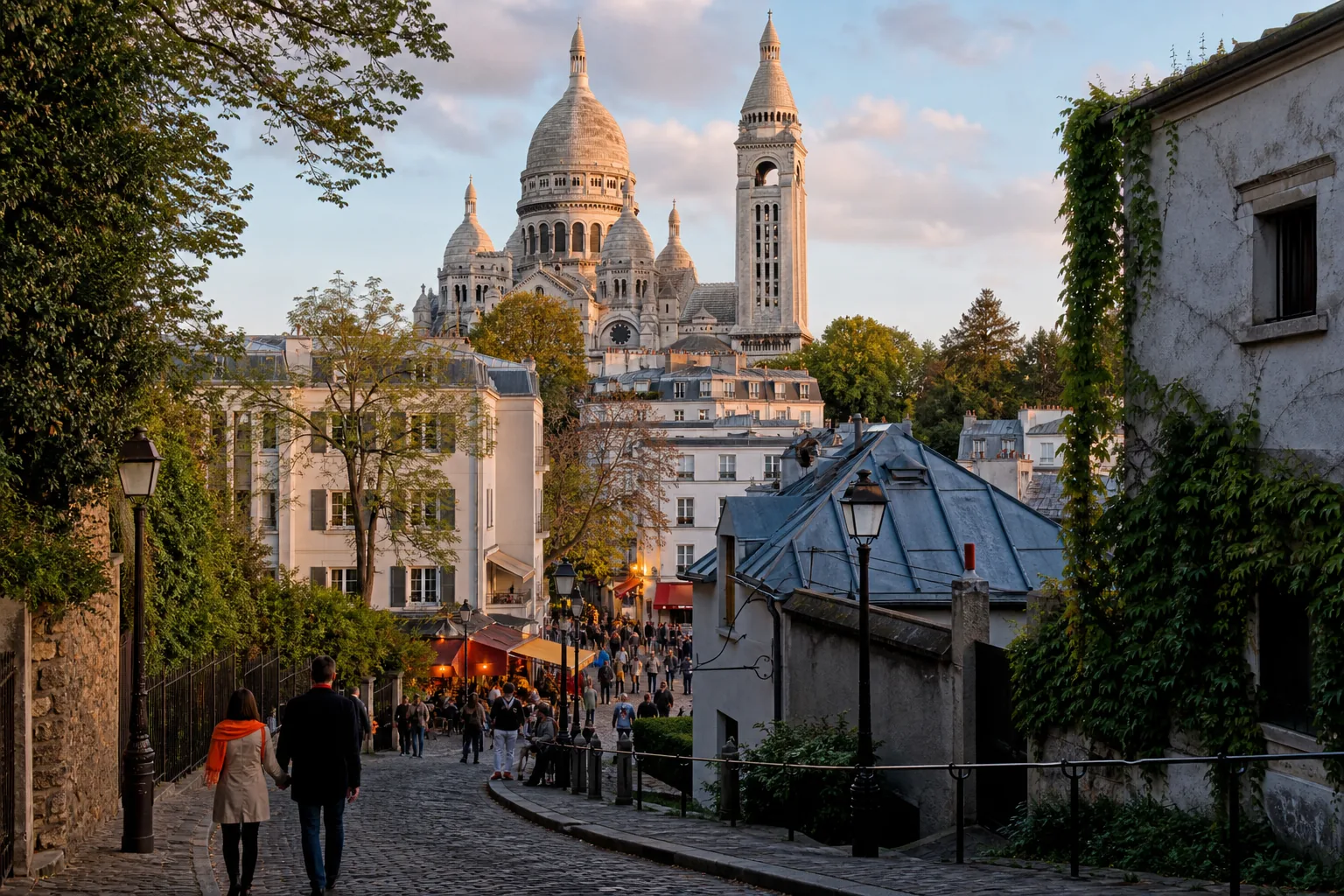
Build day three of your Paris itinerary 5 days around Montmartre. Go for the hill, the streets, and the views first. Decide on Moulin Rouge only after you know how your evening feels.
Montmartre sits in the 18th arrondissement, so wear shoes that can handle steep streets and stairs. If you do not want to climb the full hill, use the funicular to reach Sacré-Cœur.
Start at Sacré-Cœur, then walk toward Place du Tertre. The square is busy and touristy, but it remains a useful stop because it shows the neighborhood’s old artist identity. After that, take the slower route along Rue de l’Abreuvoir.
Continue through Parc Marcel Bleustein Blanchet if you need a bench and a quieter view. Montmartre works best when you stop chasing every named sight. The hill gives you enough to look at.
Then decide about Moulin Rouge. Is it worth it? Yes, if you enjoy stage shows and want a planned night out. Skip it if you are buying a ticket only because the name feels mandatory. The show adds cost and a late finish after a day of walking.
We would not pair Moulin Rouge with another major museum. Choose a simple meal, leave time for the theater, and protect your return route. If you skip the show, stay in Montmartre for sunset or head down toward Galeries Lafayette Haussmann.
A walk through the neighborhood also gives you a useful counterpoint to the grand monuments.
Be alert in crowded spots. Keep bags closed near the funicular, the basilica, and busy Metro platforms. That is basic city sense, not a reason to avoid the area.
Our verdict: Montmartre earns the day. Moulin Rouge earns a place only when the show itself interests you.
Step 4: Spend a slower day in Le Marais and choose lunch carefully
Use day four to slow down in Le Marais. This is the part of the Paris itinerary 5 days plan where you should stop measuring the day by ticket count.
Le Marais spreads across the 3rd and 4th arrondissements. Start on foot and let the route bend around small streets, courtyards, shops, and old stone buildings. A loose plan works here, but give yourself two fixed points: lunch and one indoor stop.
Place des Vosges makes a good first pause. Bring coffee, sit for a while, and resist the urge to turn the square into a five-minute photo stop. Paris has already given you plenty of major landmarks. Today is about pace.
For lunch, L’As du Fallafel is a named option in the research, but expect a line. It is in the 4th arrondissement and sits near Rue des Rosiers. If the queue eats too much of your afternoon, move on. A famous lunch is not worth losing half the neighborhood.
Le Marais also has a strong Jewish history and LGBTQ presence. Walk with respect. Read the memorial plaques, notice the community businesses, and do not treat the neighborhood as a themed backdrop.
Pick one museum if the weather turns bad. Consider the Picasso Museum or another indoor stop. Do not stack both after four days of walking unless museums are your main reason for coming.
We like keeping dinner close to where we finish. Long cross-city rides are the enemy of a slower day. The guides won’t always tell you that the last Metro trip can feel like another attraction.
Pro Tip: Check opening days before assigning a museum to Le Marais. Paris museums and shops may close on different days, so keep one flexible outdoor route ready.
Keep lunch, one museum, and one long walk. That is enough.
Step 5: Choose between Versailles and a more relaxed final day
End your Paris itinerary 5 days with a choice. Visit Versailles Palace and Gardens if the palace is a real priority. Stay in Paris if you want your final day to feel calm.
Versailles is outside central Paris, in Yvelines, so treat it as a full travel day. Leave early enough to protect the visit from delays. Do not add Montmartre, a major museum, or a late show afterward. The palace and grounds need your attention.
Versailles makes sense for travelers who care about royal history, formal rooms, and large gardens. It is less appealing if you dislike crowds, long walks, or a day built around one huge site. That trade-off is the part many itineraries skip.
If you stay in Paris, start with Shakespeare & Company bookshop in the 5th arrondissement. Then walk by the river and let the day develop without a strict list. The Coulée Verte in the 12th arrondissement gives you another slower route above the city streets.
We prefer the relaxed option when your trip began with a flight, jet lag, or four packed sightseeing days. You will remember the trip better if the last day includes time to sit down.
For airport planning, check your departure time before choosing Versailles. A day trip is a poor fit when you need to collect bags or reach the airport that evening. Build in a buffer instead of trusting the perfect-case route.
If Versailles is the reason you came, go. If it is only on the list because every itinerary includes it, stay local.
FAQ
Is five days enough for Paris?
Yes, five days is enough for a first visit if you group sights by area. This Paris itinerary 5 days plan gives the Louvre, Eiffel Tower, Arc de Triomphe, Musée d’Orsay, Montmartre, Le Marais, and either Versailles or a slower final day. You will not see everything. That is the point.
How much money do I need for five days in Paris?
Your budget depends on hotels, meals, and paid sights. The listed entry fees include €13 for the Arc de Triomphe, €17 for Musée d’Orsay, and a fare for the Montmartre funicular. Exchange rates change, so check the current USD value before you book. Many walks and gardens cost nothing.
What should I book ahead in Paris?
Book the Louvre, the Eiffel Tower if you plan to go inside, popular shows, and any fixed-time tour ahead of your Paris itinerary 5 days. Reserve a restaurant when dinner timing matters. Leave parks, neighborhood walks, and river strolls flexible because they do not need a timed ticket.
Is Versailles worth visiting on a five-day Paris trip?
Versailles is worth visiting when palace history and formal gardens are high on your list. It takes a full day outside central Paris, so it replaces a slower city day. Skip it if you would rather explore neighborhoods, sit in cafés, or avoid another crowded attraction after four active days.
What should I skip in Paris?
Skip any attraction that forces you to cross the city for a short visit. In this Paris itinerary 5 days plan, Moulin Rouge is optional, Versailles is a choice, and extra museums should stay off the list unless you love them. A shorter day often beats one more rushed stop.
Final Thoughts: Keep the itinerary ambitious but breathable
Use the first four days for Paris’s major sights and neighborhood walks, then choose Versailles only if it genuinely appeals to you. Before you leave, book the fixed-time attractions and mark one open block on each day. That small bit of space is where the city usually wins you over.
Solo female travel Costa Rica guide: how safe it is as of 2026, San José tips, a first route, bus vs shuttle vs car, and when a small group tour helps.
Verdict: Costa Rica is one of the easiest first solo trips in Latin America. As of November 2026 the US rates it Level 2 for crime, mostly petty theft, so plan San José nights carefully, use shuttles on long hops, and keep valuables close.
Solo female travel Iceland guide: how safe it is, the real risks (weather and roads), when to go, how to get around, and when a small group tour helps.
Verdict: Iceland is one of the easiest countries in the world for a woman to travel alone. The risk is the weather and the roads, not people, so plan around conditions, share your route, and consider a day tour for anything remote.
Scared to travel alone? Name the fear, shrink the trip, plan the first night, and let the nerves ride along. A first-timer's honest guide from Maren.
Verdict: You will not stop being afraid before you go. Shrink the trip, plan the first night, and go scared. The fear gets smaller once you are moving.