Travel Apps: What to Use for Every Trip
Find the best travel apps for flights, bookings, itineraries, transit, and travel days, with honest trade-offs and clear recommendations.
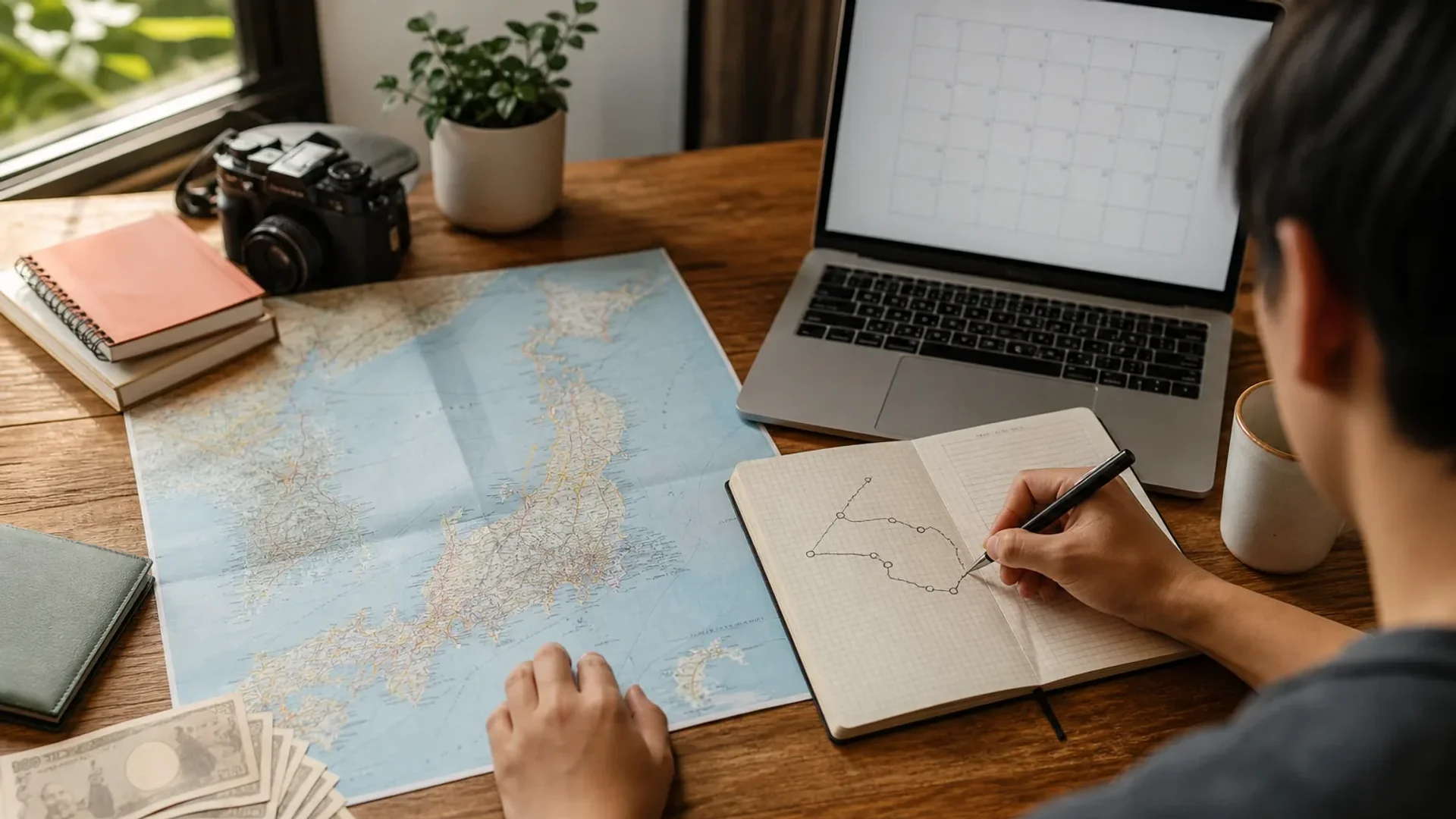
Japan is easy to visit badly. Fast trains tempt you to add too many cities, while pass prices and advance tickets can quietly wreck your budget. We use a six-step plan that starts with your travel style, then builds a route, daily pace, rail math, bookings, and arrival prep.
Before you plan a trip to Japan, decide what you want the trip to feel like. Your dates should follow that choice, not the other way around.
Write down your top two reasons for going. They might be food in Osaka, temples in Kyoto, city life in Tokyo, skiing, anime, gardens, or a slower stay in smaller towns. Two clear priorities beat a list of twenty attractions.
Then choose your travel window. Spring and autumn often bring pleasant weather, but cherry blossom and fall color periods can push up demand in Tokyo, Kyoto, and Nara. Summer brings humidity, rain, festivals, and a risk of typhoons. Winter is colder, yet city stays can cost less outside ski areas and the year-end holiday rush.
May and October to November can work well when you want a middle ground. January, February, and September often see fewer international visitors, though September can bring warm weather and storms. Check the holiday calendar before you book. Golden Week, Obon, and the year-end period can fill trains and rooms across the country.
Next, set a daily budget before you look at hotels. A budget trip may run around ¥10,000 to ¥15,000 per person per day, or about $65 to $100. Mid-range travel costs vary by season, city, and comfort level. Those figures exclude international flights.
We also add a buffer for baggage fees, airport transfers, weather changes, and meals near major stations. Those small costs rarely ruin a trip alone. They hurt when you forget all of them.
Use our guide to the cheapest time to fly to Japan while comparing dates. Set a price alert once you have a travel window, then stop checking every hour.
Milestone: You should now have dates, a spending range, two trip priorities, and a list of dates to avoid.
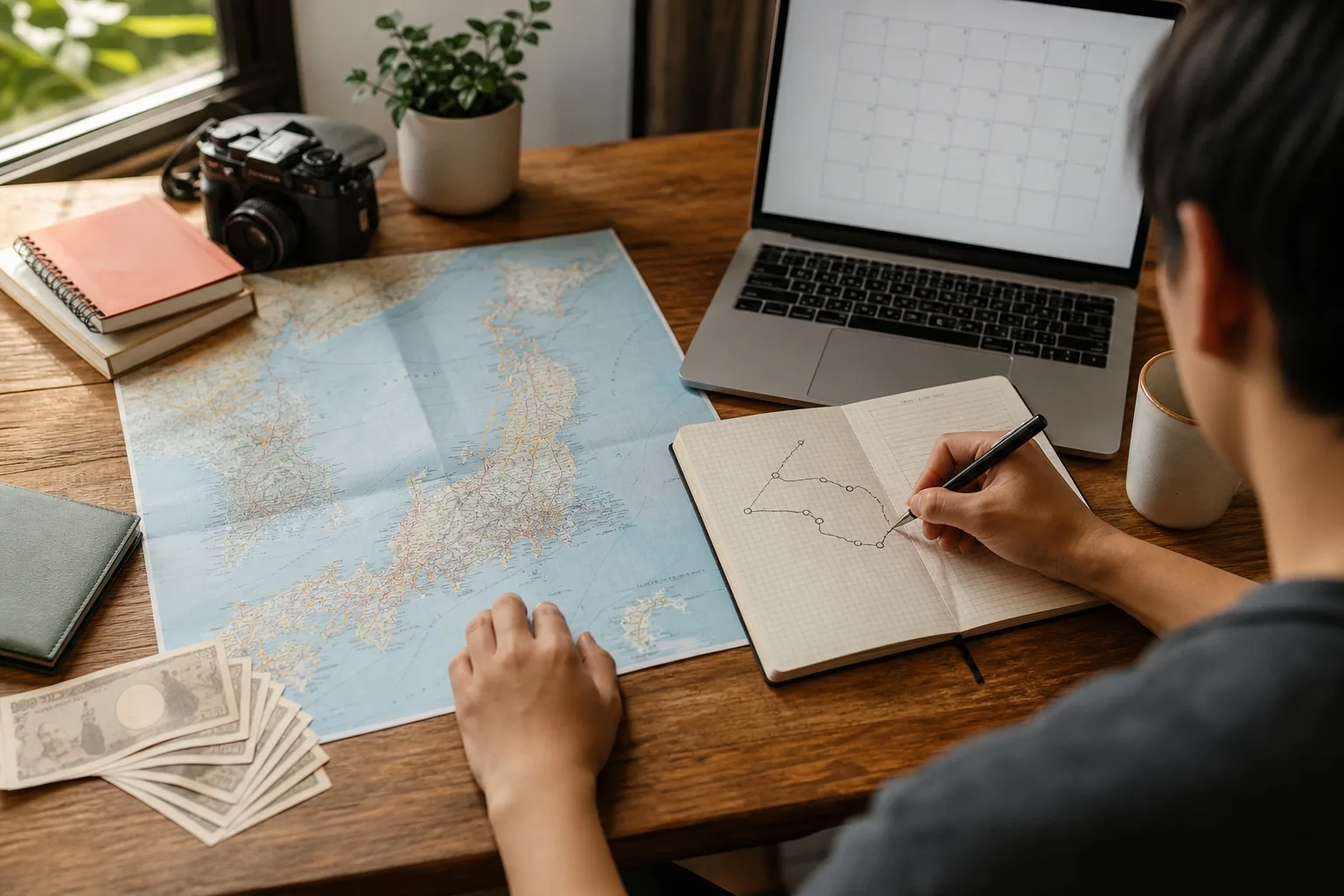
A workable Japan route gives each base city enough time. It also treats a hotel move as half a day, even when the train ride looks short.
For seven days, keep the route tight. Three nights in Tokyo, two nights in Kyoto, and one night in Osaka can work for a first visit. If you dislike packing and unpacking, stay in Kyoto and make Osaka an evening or day trip instead.
Tokyo needs at least three nights for a first visit. The districts feel like separate cities, and crossing the city takes time. Kyoto deserves two or three nights, especially if temples and traditional streets are a main reason for your trip. Osaka works well as a food base, though it does not need a hotel stay on a short trip.
For ten days, add Hiroshima and Miyajima, or give Kansai more breathing room. A useful shape is Tokyo, Kyoto, Nara as a day trip, Hiroshima, then Osaka. Keep the order linear when possible. Flying home from Kansai can save you a return trip to Tokyo.
For fourteen days, you can add Hakone, Kanazawa, or more time in Hiroshima. You could also focus on one wider region instead of adding another long rail leg. Hokkaido and Kyushu usually deserve their own trip unless you have at least two weeks and accept more internal travel.
We use one simple rule: if you have more cities than full travel days, cut a stop. A Tokyo to Kyoto move may take about two and a half hours on the train, but hotel checkout, the trip to the station, platform walks, the ride, and check-in can fill half a day.
That hidden margin matters most in huge stations. A five-minute transfer on a map can mean ten minutes of walking, a ticket gate change, and a search for the right exit. Build one main area into each sightseeing day. Add a second area only when the transport is direct.
Our Japan itinerary for seven days shows the short-route trade-offs. For a longer visit, the Japan two-week itinerary adds Hiroshima without turning every morning into a station sprint.
Stay near a useful station, not simply near a famous sight. A central base can save an hour each day, which gives you time for a meal, a rest, or one quiet street the guides won’t mention.
Milestone: Your route should now show each overnight base, each travel day, and at least one free or slow block.
To plan a trip to Japan without burning out, build days around neighborhoods instead of isolated pins on a map.
Start with your fixed bookings. Put timed attractions, special meals, and long day trips on the calendar first. Then group nearby sights around them. This keeps you from crossing Tokyo three times in one day.
Use a simple daily pattern:
For example, pair Asakusa with Ueno rather than adding Shibuya the same day. In Kyoto, visit a major shrine early, then stay south or return to your hotel before choosing an evening area. In Osaka, combine a Dotonbori food walk with nearby Namba streets.
Give arrival days a soft landing. After a long flight, check in, eat near the hotel, and visit one easy neighborhood at most. Jet lag plus a packed schedule is a poor bargain.
Keep one half-day open every three or four days. Use it for laundry, a missed sight, rain, or doing nothing. That space is where the trip starts to feel like a holiday instead of a work plan.
For day trips, count the full door-to-door time. Osaka to Nara may look quick on a timetable, but station walks, local transport, and time inside the temples add up. Hakone and Miyajima also need more room than the train schedule suggests.
Attractions may need advance reservations.
Here is the test we use: can you remove one activity from the day without losing the point of the day? If not, the schedule is too tight.
Milestone: Every day should now have one anchor, one nearby follow-up, a meal area, and breathing room.
A Japan Rail Pass is worth it only when the covered train fares beat its price. Do not buy one because a travel blog says every visitor needs it.
The national pass price is scheduled to rise on October 1, 2026. The ordinary seven-day pass will cost ¥53,000, or about $335. The fourteen-day pass will cost ¥84,000, or about $535. The twenty-one-day pass will cost ¥105,000, or about $670. These passes require temporary-visitor status, shown by the tourist stamp in your passport. Child fares are half the adult price.
Check current Japan Rail Pass prices before paying. Prices and conditions can change, and a pass that works before the increase may not work after it.
| Trip shape | Likely decision | Reason |
|---|---|---|
| Tokyo, Kyoto, and Osaka | Buy individual tickets | The classic route usually does not reach the national pass price. |
| Tokyo to Kyoto, Hiroshima, Osaka, then Tokyo | Run the math | Several long legs may approach the break-even point. |
| One Kansai base with regional day trips | Check a regional pass | A Kansai pass can cost far less than the national pass. |
| Kyushu rail loop | Check the All Kyushu Pass | A seven-day pass is listed at ¥26,000, compared with about ¥45,000 in separate loop fares. |
| Long trip across several regions | Compare national and regional passes | Regional passes may beat one long national pass. |
The Kansai Wide Area Pass covers Osaka to Himeji and the Sanyo Shinkansen to Okayama. It costs roughly ¥12,000, about a quarter of the national seven-day pass. The JR West Kansai Area Pass covers Osaka, Kyoto, Nara, Kobe, and Himeji, with prices from ¥2,400 for one day to ¥5,600 for four days.
The JR East Tokyo Wide Pass costs ¥15,000 for three consecutive days. It covers trips toward Karuizawa, Gala Yuzawa, and the Izu Peninsula. That can make sense when you plan several long day trips from Tokyo.
Remember the Nozomi restriction. The national pass does not include the fastest Nozomi or Mizuho services without a paid supplement. The Nozomi Unlimited Upgrade is listed at ¥10,000 for the pass duration. That may be worth considering when speed matters on several long legs, but include it in the total before you compare.
Ordering a voucher abroad can add about ¥3,000 compared with ordering at home. If you need a pass, check the purchase rules before departure rather than leaving the decision until you reach Japan.
Verdict: For Tokyo, Kyoto, and Osaka alone, skip the national pass and price individual rides. For a long loop, use a calculator with your exact dates and activation window.
Booking order matters when you plan a trip to Japan, especially around cherry blossom, autumn color, major festivals, and school holidays.
First, confirm entry rules for your passport. Many visitors can enter for short tourism stays without a visa, but requirements vary by nationality. Check the current rules with the Japanese embassy or consulate that covers your home country. Also confirm your passport remains valid for the full stay.
Next, decide whether an open-jaw flight fits your route. Flying into Tokyo and home from Osaka can remove a long return train ride. If the fare difference is large, use a round trip and add a final night near your departure airport.
Book your hotels after the route is stable. Choose the area before the room. In Tokyo, Shinjuku suits nightlife and rail links, while Asakusa gives you a slower start. In Kyoto, the station area helps with trains. Downtown works better for evening walks. In Osaka, Namba suits food and nightlife, while Umeda helps with station access.
Do not book a remote hotel to save a little money without pricing the daily transport and time cost. A cheaper room can become expensive when you repeat a long commute each morning.
Then reserve fixed attractions. TeamLab Planets and the Ghibli Museum need advance planning. Add booking release dates to your calendar as soon as you know your travel month.
Reserve popular restaurants only after you know the correct day and neighborhood. Keep at least one meal flexible. Small shops may close on a set weekday, and a rainstorm can change your plan.
Book travel insurance before the trip becomes nonrefundable. Look for medical cover plus protection for cancellation, interruption, lost bags, and major weather events. Store the policy number offline, but do not assume insurance covers every delay.
We also recommend arranging internet access before departure. An eSIM, physical SIM, or pocket Wi-Fi plan can help you reach maps and booking details as soon as you land. The guides won’t help when you are standing outside a station with no signal.
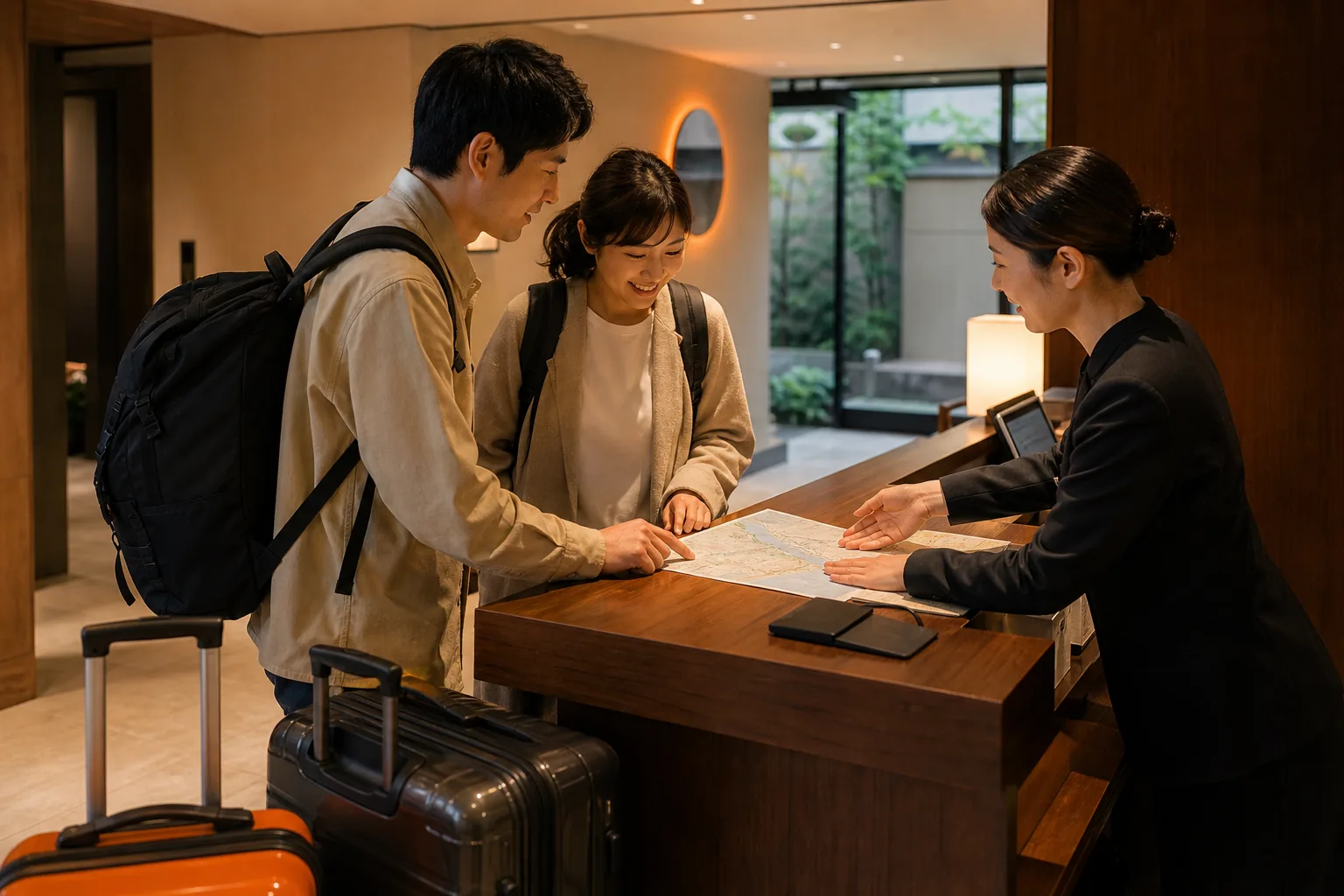
Milestone: You should have flights, cancellable rooms where possible, fixed attraction bookings, insurance, and a data plan.
The final step turns a good Japan plan into a trip you can use on the ground. Prepare the small systems before you leave.
Download your key maps and save hotel addresses in Japanese. Station names can look different in English and Japanese, and large stations may have many exits. Save screenshots of your first hotel, airport transfer, and any late-night booking.
Plan your payment mix. Cards work at many major hotels, department stores, large restaurants, and convenience stores. Rural shops and small restaurants may still require cash. Keep cash ready, especially outside major cities, while cards such as Visa are often accepted in urban businesses.
Use a rechargeable IC card for local trains, buses, convenience stores, and vending machines where accepted. Suica and Pasmo are common examples, though card availability and phone support can vary. A physical card may be simpler if your phone cannot add a compatible transit card.
Keep a small cash reserve for ticket machines and places that do not take cards. The amount you load onto a transit card depends on your route and early local travel needs.
Install a translation app before boarding. Download offline language files if the app supports them. Take a photo of a menu when needed, but remember that machine translation can miss tone and context.
Carry a battery pack. Running maps and translation all day can drain a phone, and free Wi-Fi is not a plan. Enable official safety alerts for earthquakes, tsunami warnings, and severe weather if the app is available in your language.
Pack for the season rather than the fantasy of Japan. Spring evenings can feel cool. Summer is humid. Winter in Tokyo is much milder than winter in ski areas. Comfortable shoes matter because station walks and neighborhood streets add up.
Learn a few habits before you arrive:
One more thing: decide what you will do with large bags. Forwarding luggage between hotels can make a city move easier, but keep one small bag with medicine, documents, and a change of clothes.
Final check: Test your payment cards, save your hotel details offline, charge your devices, and confirm the first transport leg from the airport.
Seven days is enough for a first look at Tokyo and Kyoto, with Osaka as an optional stop. Ten days gives you room for Osaka or Hiroshima. Fourteen days lets you add Hakone, Kanazawa, or more time in western Japan. We suggest fewer bases when your trip is short because hotel moves consume much more time than train schedules show.
Japan can fit several budgets, but transport and hotels drive the total. A budget traveler may spend about ¥10,000 to ¥15,000 per day, while mid-range travel varies by season and choices. Those figures exclude international flights. Food can stay manageable if you mix restaurants with convenience stores and local cafés.
You do not usually need a national pass for only Tokyo, Kyoto, and Osaka. Compare your actual Shinkansen fares first. The pass becomes more useful when you add long return trips or several regions within its validity window. A regional pass may cost less when your travel stays in Kansai, Kyushu, or the Tokyo area.
Book hotels as soon as your route is firm for cherry blossom, autumn color, Golden Week, Obon, and the year-end holiday period. For quieter travel windows, you may have more choice. We prefer cancellable rooms when plans are still moving, then switch only after flights and major bookings are settled.
Bring access to cash even if you plan to use cards. Major urban businesses often accept Visa and other cards, but rural shops, small restaurants, and some ticket machines may not. Keep a working card as a backup, then withdraw yen as needed rather than carrying your full trip budget at once.
Find the best travel apps for flights, bookings, itineraries, transit, and travel days, with honest trade-offs and clear recommendations.
Use these travel planning tips to set a realistic budget, choose the right pace, book smarter, and build an itinerary you will enjoy.
Hostel vs hotel for solo female travelers: real price figures, safety comparison, and Maren's honest recommendation including the private hostel room option.