
Travel Apps: What to Use for Every Trip
Find the best travel apps for flights, bookings, itineraries, transit, and travel days, with honest trade-offs and clear recommendations.
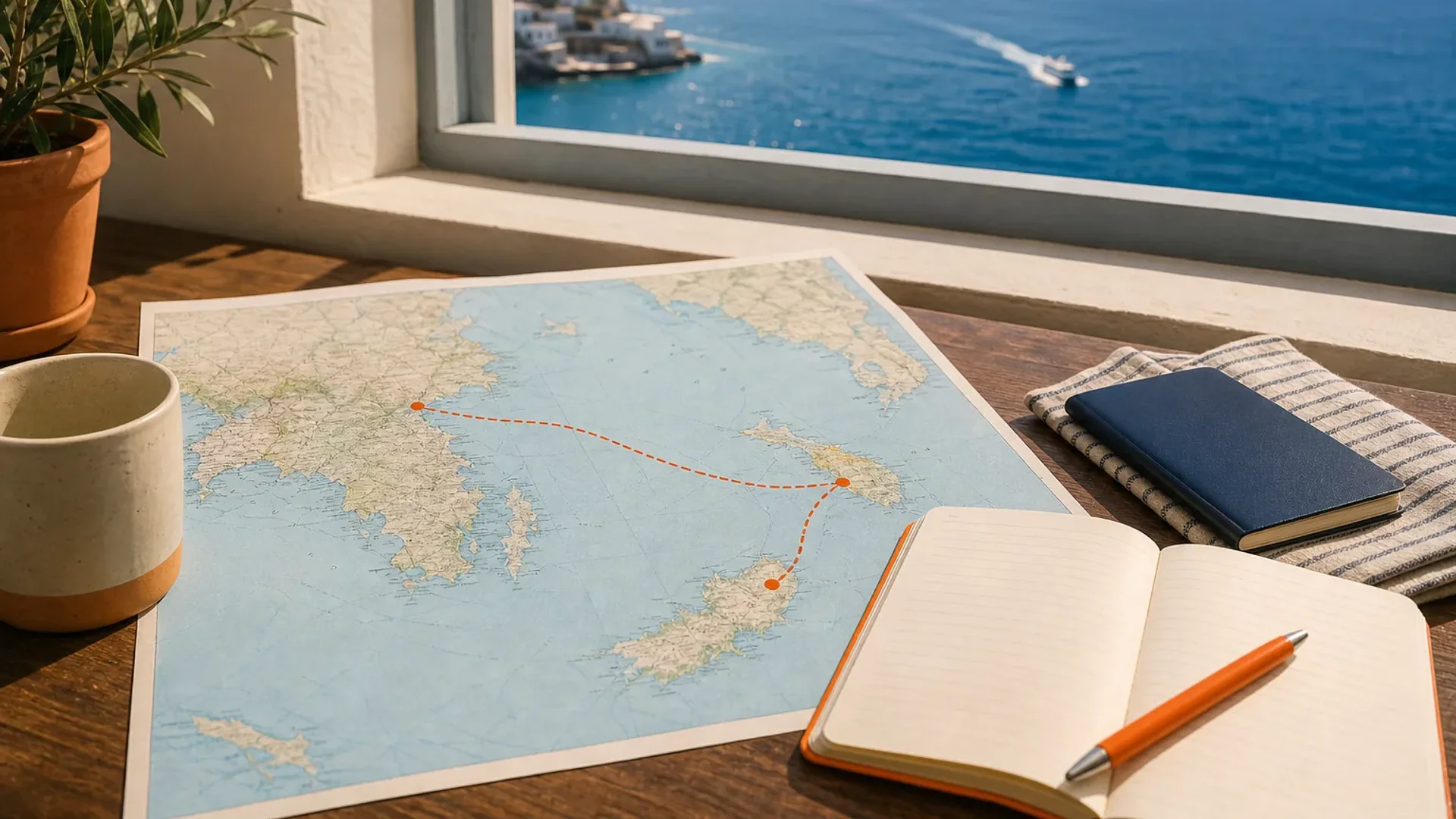
Planning a trip to Greece gets messy when every island looks worth a week. Most checklists also skip the details that shape your trip: timing, ferry costs, and the number of travel days you’ll lose in transit. We use a simple order that keeps the plan clear: choose your route, set the season, price the big pieces, then book and trim.
Start planning a trip to Greece with a route, not a pile of saved places. Pick one mainland base plus one or two islands unless you’ve got at least two weeks.
Match each stop to the kind of trip you want. Athens fits travelers who want ancient sites and museums. The Acropolis includes the Parthenon, a temple built in the fifth century BCE, while some Athens metro stations display archaeological finds. Read a short overview of Athens and its history before you decide how much city time you need.
Santorini suits couples who want cliff towns and caldera views. But we wouldn’t build a whole Greece trip around it if you dislike crowds or high lodging costs. The island is easy to admire for two or three nights, then leave.
Choose Milos if beaches and sea caves are the point. Choose Rhodes for its medieval old town. Crete makes more sense when archaeology is your main draw and you’ve got enough time to cover long distances.
Thessaloniki works well for food-focused travel. Corfu fits a slower trip with boat time and green hills. Mykonos is built around nightlife, though August is its busiest month. That trade-off matters more than a glossy photo.
Avoid pairing places that require separate long transfers unless one of them is your main reason for going. A trip with four bases can look rich on paper and feel like luggage management in real life.

We also use a filter that saves time: name the one place you’d regret skipping. Build around it, with a clear view of what earns your time and what you can leave out.
Key Takeaway: Keep your first Greece trip to two or three bases, and let your main interest decide the route.
When planning a trip to Greece, choose your travel window before you choose your hotels. The season changes crowd levels, ferry demand, heat, and the feel of each stop.
Summer has the strongest demand, with August especially busy in places such as Mykonos. If your plans include famous archaeological sites, aim for early morning or late afternoon. That simple shift can make a packed landmark feel far less tiring.
Shoulder-season planning gives you more room to adjust.
Use your dates to set a trip rhythm:
Book timed entry online when a major site requires it. Wear sturdy shoes at historic places with uneven stone. These are small details, but they prevent the kind of avoidable problem that can sour an otherwise good day.
We wouldn’t pick dates based on weather alone. Ask what you want to do each day. A traveler focused on museums can handle a busier season better than someone who wants quiet beaches and long walks. The basic test is simple: weigh weather against crowds, prices, and the activities you actually plan to do.
Pro Tip: Write your three most important activities beside your travel dates. If two depend on calm seas or low crowds, keep at least one spare day.
A Greece travel budget works better when you price the trip by day and by transfer. Don’t start with one round number. Start with the costs that can change your route.
The checklist data makes the problem clear. Only two of the 44 items included a local cost. One listed a ferry to Paxos and Antipaxos at €30 to €35. Another listed the Venetian Castle in Parga as free to enter. Almost every other activity lacked a price cue.
That means online checklists aren’t enough for a full budget. You need a short worksheet with these lines:
Use euros for every estimate. Then convert the total to US dollars before you book. Rates change, so treat the dollar figure as a planning view rather than a promise.
Set an anchor price for each transfer. If the ferry cost makes a short island stay look poor, cut that island. Paying for a long transfer to spend one full day somewhere rarely feels worth it.
We also split the budget into fixed and flexible costs. Flights and booked rooms are fixed once paid. Food and local rides have more give. If you need to cut back, shorten the route before turning every meal into a compromise.
Treat missing budget details as a problem to solve, not a reason to make vague claims. We recommend checking each major cost against an official booking page before you commit.
One honest rule: don’t compare islands by room rate alone. A cheaper room can lose its advantage after a costly ferry, taxi ride, or extra night added to make the connection work.
The booking order matters when planning a trip to Greece. Secure the route before you lock every room, or one awkward ferry schedule can force a costly rewrite.
Start with your international flight dates. Next, check the route between your main bases. Only then book accommodation that matches those arrival points.
Ferries are part of the experience, but they are still transport. Treat the day as a travel day. Add time for getting to the port, boarding, baggage, and the ride from the arrival port to your room.
When you compare options, record four details: departure time, arrival time, port location, and change rules. A slightly earlier crossing may save half a day later.
Don’t book nonrefundable rooms on every island before checking the ferry plan. That is how a flexible trip becomes a chain of fees. If your route includes Paxos and Antipaxos, the available checklist figure of €30 to €35 gives you one starting point, but verify the current fare before purchase.
We use a simple booking file with one tab for confirmations and one for transport. It sounds dull. It is much nicer than searching email while standing beside a port gate.

The booking logic we use across destinations is simple: set alerts, compare the full trip cost, and avoid treating the cheapest fare as the whole answer.
A day-by-day plan should tell you what to do first, not trap you in a minute-by-minute schedule. Planning a trip to Greece gets easier when each day has one main job.
Give arrival days a light shape. Find your room, eat near your base, and take a short walk. Save the Acropolis, a long hike, or a boat trip for a day when you have energy and a clear weather window.
For each full day, choose:
Group places by location. In Athens, don’t cross the city three times for separate sights. In Crete, check drive times before treating two sites as a single day. On an island, confirm whether the port sits near your base or on the other side of the island.
Build one buffer day into a 10-day trip. Use it for weather, a missed connection, or the place that turns out to deserve more time. This is also where you can add a small detour. The Venetian Castle in Parga is free to enter and has sunset views, though its stone steps are uneven.
Long hikes need the same care. The classic Vikos Gorge crossing from Monodendri to Vikos is about 12.5 kilometers and takes five to seven hours. Don’t place it between two transfers. Treat it as the day’s main event and wear shoes that can handle rough ground.
Leave room for a change of mind. If a museum holds your attention, stay. If a beach is crowded or the wind turns, move on. The guides won’t always tell you that a skipped sight can improve the day.
We keep the final itinerary to one page per day. Each page shows the base, transport note, main plan, backup plan, and booking reference. That is enough detail to help without making you stare at your phone all day.
Key Takeaway: Plan one anchor activity per day, group nearby stops, and protect at least one buffer day for a route this complex.
You need at least five to seven days for Athens plus one island or mainland base. Give yourself eight to ten days for Athens and two island stops. A two-week trip can include a larger island such as Crete, but only if you accept longer travel days. The right length depends more on your route than on the number of places saved.
The right month depends on your plans, but shoulder-season dates often make it easier to manage crowds and transfers. August is especially busy in Mykonos. If you plan historic sites, go early or late in the day. If hiking matters, the research notes May as a useful month for lower crowds.
You need a budget that includes flights, rooms, transport, meals, and entry fees. Public checklist data rarely gives enough detail, so price each route before booking. One listed ferry to Paxos and Antipaxos cost €30 to €35, while the Venetian Castle in Parga was free. Check current fares before you rely on either figure.
You should check ferry schedules before booking island accommodation. Advance booking makes more sense when dates are fixed, the route controls your next room, or demand is high. Keep arrival time and port location beside each ticket. A ferry is a travel day, so don’t attach your only major activity to the arrival evening.
Yes, Greece is worth visiting for one week if you keep the route tight. Choose Athens plus one island, or focus on the mainland. Adding several islands creates transfer time that can eat into the trip. We would rather see two places well than collect four rushed check-ins.
We recommend choosing fewer bases than your first draft suggests. Set your dates, price the transfers, and book only after the route works on paper. The goal is simple: spend less time moving bags and more time enjoying the place you came to see. One small thing worth sorting before you fly: the streaming services you pay for at home often behave differently once you are on Greek Wi-Fi, so it is worth reading how to keep access to your home streaming while travelling if quiet ferry days and hotel evenings are part of the plan.
Find the best travel apps for flights, bookings, itineraries, transit, and travel days, with honest trade-offs and clear recommendations.
Use these travel planning tips to set a realistic budget, choose the right pace, book smarter, and build an itinerary you will enjoy.
Hostel vs hotel for solo female travelers: real price figures, safety comparison, and Maren's honest recommendation including the private hostel room option.