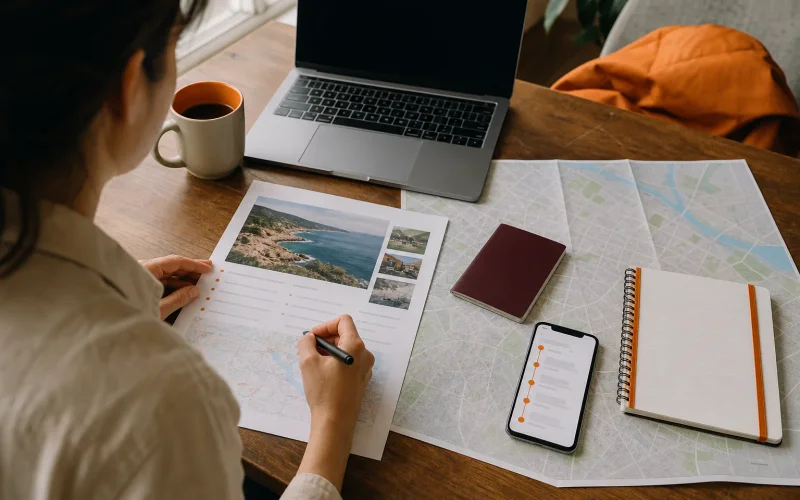
Travel Apps: What to Use for Every Trip
Find the best travel apps for flights, bookings, itineraries, transit, and travel days, with honest trade-offs and clear recommendations.
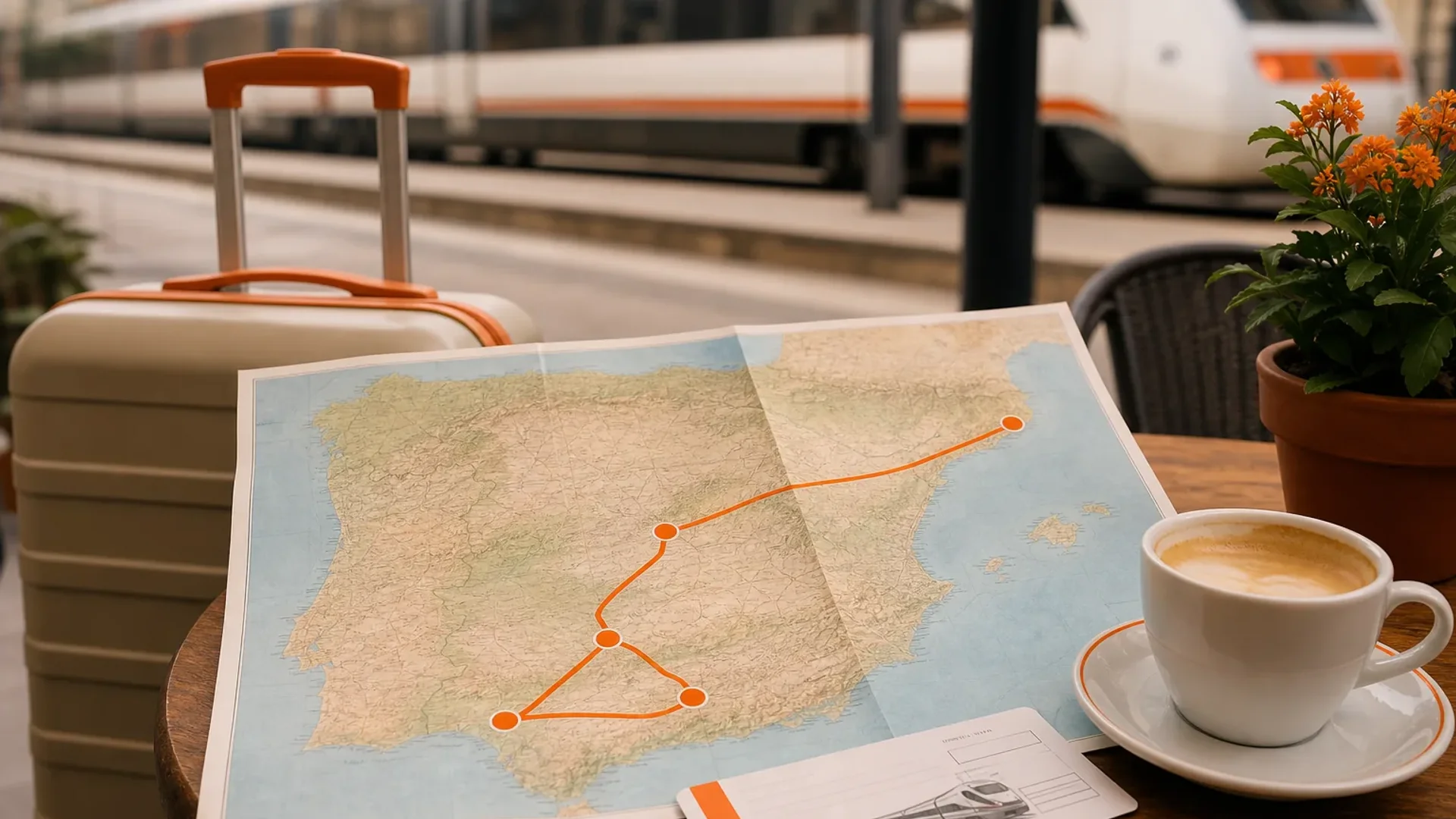
Ten days in Spain is enough for a strong first trip, but only if you stop trying to see the whole country. The clean route uses Barcelona, Madrid, Seville, Granada, and Córdoba as a day trip, with trains doing most of the work. We’ll also flag the details that need checking, since some published plans place Madrid and Seville neighborhoods in the wrong cities.
A workable Spain itinerary for 10 days needs four hotel bases, not six. We recommend Barcelona for three nights, Madrid for two, Seville for two, and Granada for two. Use Córdoba as a day trip from Seville instead of adding another hotel move.
That gives you a clear rail-linked loop:
If your flights work better in reverse, start in Madrid and finish in Barcelona. An open-jaw ticket, meaning you fly into one city and out of another, can remove a backtrack. Check both versions before you pay for anything.
We’d skip Valencia, Málaga, Toledo, and a rental car on this trip. Each can be worth your time, but adding one means taking time away from the core route. Ten days sounds long until you count airport transfers, check-in, station walks, and the hour you lose looking for the right platform.
Weather should shape your dates. April, May, September, and October are easier for long walks than the hottest part of summer. Southern Spain can feel harsh in July and August, so plan outdoor sights early. Semana Santa is a special case. Processions can change street access and opening hours across Andalusia.
Before booking, write down your must-see sights. Keep the list short. We suggest Sagrada Família, the Prado or Royal Palace, the Alcázar, the Alhambra, and the Mezquita-Cathedral. Then add only one flexible item per city.
Settle the route first, then test the travel days, and only then fill in meals and small stops. That keeps a tempting side trip from breaking the whole plan.
One warning deserves space. A source review found neighborhood errors in a published Spain plan, including Malasaña listed for Seville and Triana listed for Córdoba. Check every neighborhood against a current city map before booking a hotel.
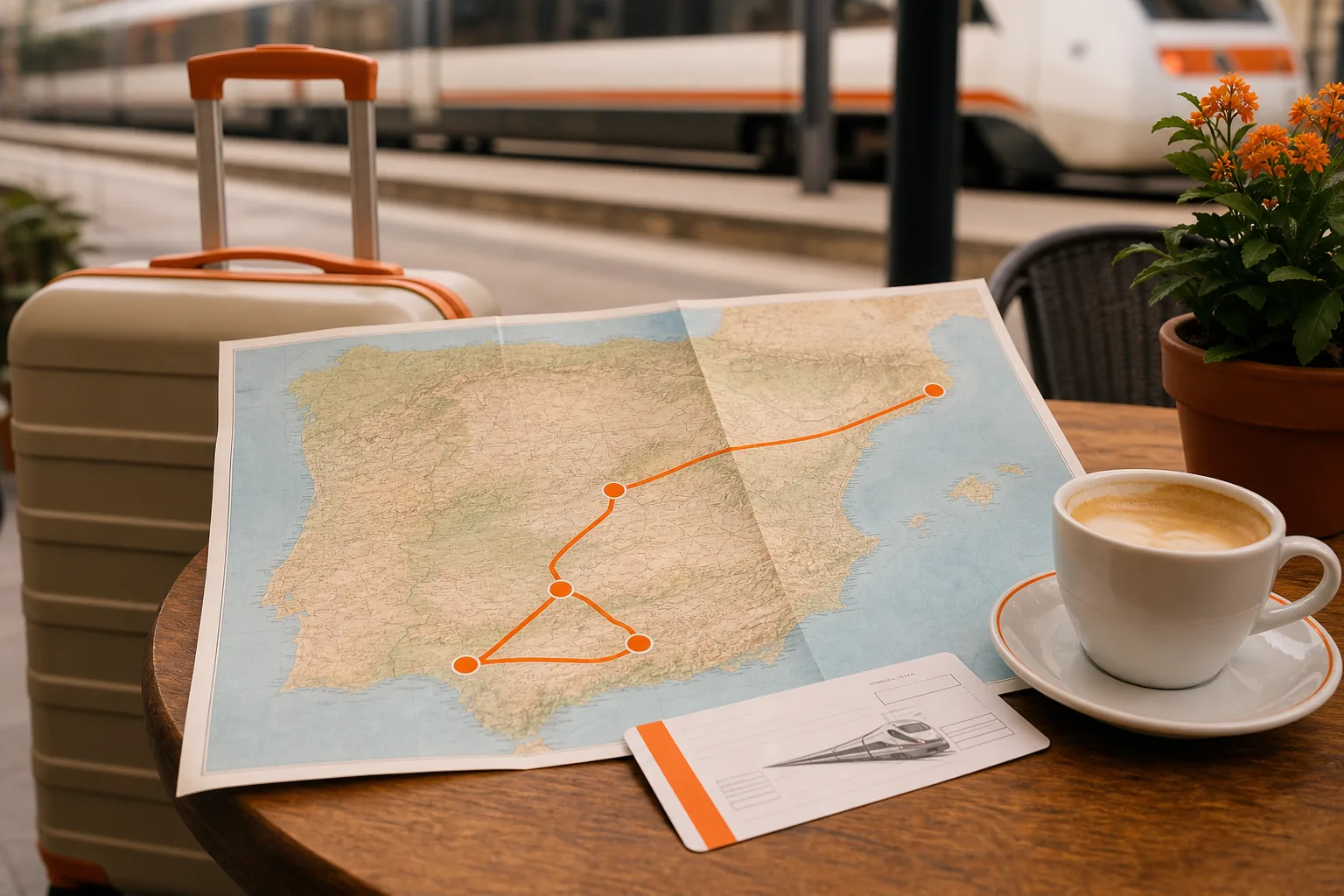
Key Takeaway: Four hotel bases keep the trip moving without turning every other day into a packing day.
For a train-first Spain itinerary, book the rarest reservations first. The Alhambra comes before the hotel. The long rail legs come before restaurant plans. Flexible sights come last.
Renfe is Spain’s national rail operator. Its official site is the place to confirm current schedules, ticket rules, and station names. The Barcelona to Madrid high-speed trip takes about 2.5 to 3 hours. Advance fares in the research ranged from about €35 to €80, while discount fares can rise sharply after the cheapest seats sell.
Madrid to Seville is another sensible long leg. Book the departure from the listed departure station, not from a generic “Madrid station” listing. For each ticket, check the exact departure station, baggage terms, and change rules. Lower-cost high-speed fares can have tighter conditions.
Check current rail information when confirming schedules and ticket details because third-party schedules can lag behind service changes. Save the ticket barcode offline. Station screens may show the platform only shortly before departure.
| Booking choice | What it saves | Trade-off | Our call |
|---|---|---|---|
| Individual train tickets | Usually keeps the plan simple | Strict fares may not allow easy changes | Use for a fixed route |
| Rail-pass option | Less planning for many rail legs | Some trains still need seat reservations | Consider only with extra rail travel |
| Lower-cost high-speed fare | Lower starting fare | Bag rules and changes can be tighter | Good for light packers with fixed dates |
| Flexible fare | More room if plans shift | Higher fare | Useful around fixed arrival times |
| Rental car | Access to rural stops | Parking, tolls, and one-way fees | Skip it for this city route |
Hotels should come after the long train legs. In Barcelona, El Born gives you evening energy and short walks, while Eixample has wider streets and useful metro links. In Madrid, choose a central base near Atocha or the historic center. In Seville, stay close enough to walk to the Alcázar area. Granada rewards a central base because the hills add time.
Carry a small bag. A light roller fits the rhythm better than luggage you must drag over cobbles. Also leave at least 20 minutes between connecting trains when a change is required. Missing a tight connection is a poor use of a vacation day.
Pro Tip: Put every train, hotel, and timed-entry confirmation in one offline folder. Give each file a name that starts with the city and date.
Madrid can fill three days, but it doesn’t need three packed days. In a route that starts there, use the first day to get your bearings, the second for major sights, and the third for a slower choice or a day trip.
Day 1 should stay light after your flight. Walk through Puerta del Sol and Plaza Mayor. Continue toward the Royal Palace, but save the interior if your arrival is late. La Latina works well for an easy evening meal, while Huertas keeps you near the central sights.
On Day 2, book the Royal Palace in the morning. Pair it with a nearby historic cathedral because the two sites face each other. After lunch, choose one museum. The Prado suits visitors who want Spanish painting, while Reina Sofía suits a modern-art plan. Don’t force both into one afternoon.
Retiro Park is your pressure valve. Walk there after the museum, sit near the lake, or cut the museum short if your feet hurt. A plan that leaves room for this kind of choice feels better than a checklist.
Day 3 can hold Toledo or Segovia if you want another historic city. Both are easy additions by train, but they turn the day into a travel day. If this is your first visit to Madrid, we’d stay in the city instead. Use Malasaña or Chueca for cafés and shops, then finish near Templo de Debod.
Madrid’s central area is compact enough for long walks. Use the Metro when the heat rises or your route crosses the city. From Atocha, leave extra time for station security and finding the right concourse.
The useful idea for day plans is simple: give each day one main anchor, then let nearby streets fill the gaps.
Plan your departure from Madrid before you leave for Andalusia. If you fly home from Madrid, return there the night before. If you fly from Barcelona, keep the final rail leg separate from your international flight. Same-day cross-country transfers are a gamble we’d avoid.
Four days across Seville and Granada works when each city has a clear job. Seville gives you palace architecture and a flat, walkable center. Granada gives you the Alhambra, hills, and a slower evening pace.
Use your first Seville afternoon for the Guadalquivir riverfront and Triana. The neighborhood sits across the river and has a long flamenco and ceramics tradition. It’s a good place to eat without crossing the city again later.
On the full day, enter the Royal Alcázar early. Follow it with Seville Cathedral and its tower. Plaza de España works well later because it is open and spacious. In hot weather, move the outdoor stops to morning or evening.
A flamenco show can fit on the second night. Prices in the research ranged from €20 to €50, depending on the venue and whether dinner was included. We’d choose a show-only ticket if the performance matters more than the meal.
Córdoba is the sensible optional day trip. The train ride from Seville can take about 45 minutes, with return fares in the cited research around €10 to €20. Give the Mezquita-Cathedral two to three hours, then take a riverside walk before returning to Seville.
Seville to Granada takes about 2 hours and 40 minutes on the cited high-speed service. Buy the Alhambra ticket before fixing the rest of your schedule. Your palace entry has a timed slot, so arrive at least 30 minutes early.
Give the full Alhambra complex four to five hours. That includes its main palace areas, fortress, and gardens. Wear shoes with a firm grip. Granada’s streets rise quickly once you leave the center.
Use the next day for Granada’s historic hillside neighborhood and nearby viewpoints. A local evening performance can fit in if you want a flamenco performance. If you’re tired, skip the extra show. The Alhambra is already the day’s main event.
Published plans sometimes mix up Granada’s Santa Cruz with Seville’s Santa Cruz, or repeat Triana as if it were a Córdoba district. Those errors are easy to catch when you check a map, but costly if you book the wrong base. The city name should always appear beside the neighborhood during your research.
Current entry figures in the research include €11 for the Alcázar, €5 for Seville Cathedral, and roughly €19 to €55 for Seville to Granada rail fares. Treat them as planning anchors, not promises. Prices and slots change.
For historical context, the Wikipedia reference for the Alhambra explains the palace complex’s place in Granada’s history. We use it as a quick orientation source, then confirm tickets and hours with the attraction’s current official information.
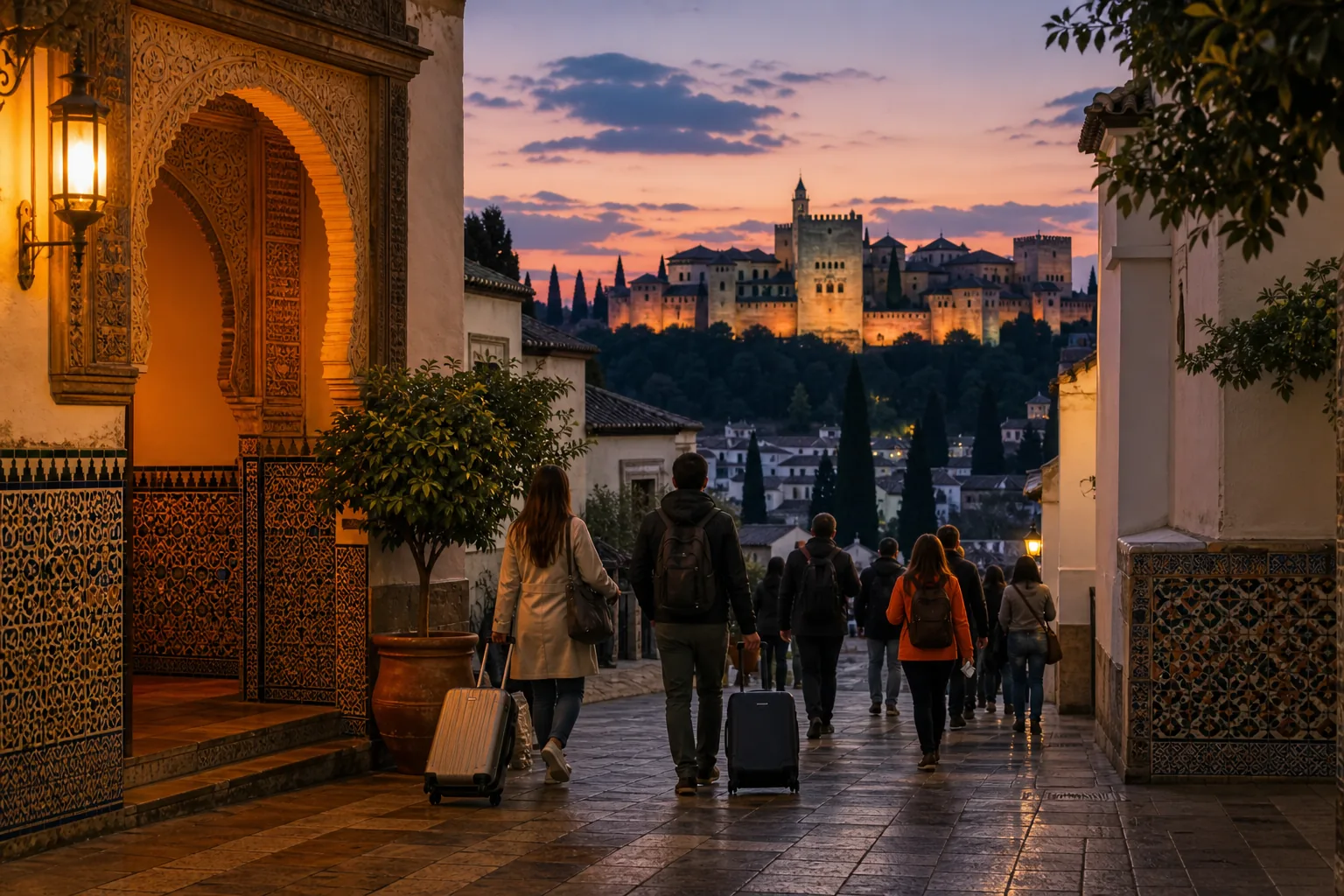
Key Takeaway: Book the Alhambra first, then fit trains and meals around its timed entry.
Three days in Barcelona works well as the opening or closing block of a Spain trip. If you start in Madrid, use Barcelona as the finale. If you fly into Barcelona, place these same three days at the front and reverse the route.
Day 1 should be gentle. Walk the Gothic Quarter and Barcelona Cathedral area. Continue toward Plaça Reial or the waterfront if your arrival leaves time. Keep dinner close to the hotel. Jet lag is a poor partner for a timed attraction.
Make Day 2 your Gaudí day. Book Sagrada Família ahead, then choose Casa Batlló or Casa Milà. Park Güell needs its own time slot. Grouping these places by transit route matters more than squeezing in every famous building.
On Day 3, choose one museum and Montjuïc. A museum can fill the morning. Use the funicular or cable car for the hill, then return to Poble Sec for Carrer de Blai in the evening. A market breakfast works better early, before the busiest crowds.
We’d skip a packed beach day if your flight leaves soon. Barceloneta is easy to reach, but a long seaside lunch can make the final airport transfer tight. Keep your last afternoon near the neighborhood you’re staying in.
Barcelona to Madrid takes about 2.5 to 3 hours by high-speed train. If you finish in Barcelona and fly from there, stay near a direct airport link or leave a generous transfer window. If your international flight leaves Madrid, travel there the previous day. Don’t make a 10-day trip depend on a same-day connection.
The route has a clear trade-off: you see several major cities, but you won’t know each one deeply. That’s fine. We’d rather give you two calm hours in one neighborhood than six rushed attractions and a hotel room full of unpacked clothes.
Ten days is enough for a focused first trip, not a full tour of Spain. A Spain itinerary for 10 days can cover Barcelona, Madrid, Seville, and Granada at an active pace. Add Córdoba as a day trip if you value the Mezquita-Cathedral. Skip extra regions unless you’re willing to lose time in one of the main cities.
The cleanest route uses Barcelona, Madrid, Seville, Granada, and Córdoba as a day trip. Start in Barcelona and leave from Madrid, or reverse the order if flights are better. The Spain itinerary works because long city transfers happen by train, while most sightseeing happens on foot or by local transit.
You don’t need a car for this urban route. High-speed trains connect the main legs, and city centers are easier without parking. A car makes more sense for rural villages or a countryside trip. For this plan, rental fees, tolls, and one-way drop charges add work without solving a real transport problem.
Your budget depends mostly on hotel choice, meal style, and train timing. Published research gives examples such as €35 to €80 for Barcelona to Madrid rail fares, €20 to €50 for a Seville flamenco show, and €19 to €55 for Seville to Granada. Check current prices before booking, since fares change with demand.
Book the Alhambra before anything else with a fixed date. Then reserve international flights, long-distance trains, and hotels near useful stations. Timed entries for Sagrada Família, Park Güell, the Royal Palace, and the Alcázar should follow. Leave markets, neighborhood walks, and most meals flexible so the trip still has breathing room.
We recommend four bases, one Córdoba day trip, and no rental car for a first visit. Set your flight search in both directions, reserve the Alhambra, then build the rail legs around it. That simple order gives the route its best chance of feeling like a holiday instead of a moving checklist.
Find the best travel apps for flights, bookings, itineraries, transit, and travel days, with honest trade-offs and clear recommendations.
Use these travel planning tips to set a realistic budget, choose the right pace, book smarter, and build an itinerary you will enjoy.
Hostel vs hotel for solo female travelers: real price figures, safety comparison, and Maren's honest recommendation including the private hostel room option.