The closest I have ever come to being scammed was not in a market in Marrakech or a back street in Rome. It was in my own kitchen, three days before a trip, when a WhatsApp message arrived that knew my hotel’s name, my check-in date, and my booking reference, and asked me to “re-verify” my card within two hours or lose the reservation. It looked more official than anything the actual hotel had ever sent me. I had my card halfway out of my wallet before the two-hour deadline snagged on something in my brain, because real companies almost never need you to panic.
That is the thing I most want you to take from this piece. The scam lists you have read for years, the bracelet, the petition, the broken taxi meter, are still out there and I will cover them, because they still work. But the scams doing the most damage in 2026 are not street theater. They arrive on your phone, they often know real details about your actual trip, and they are aimed at exactly the moment a solo traveler is most suggestible, which is when something seems to be going wrong with a booking you made alone and nobody else is double-checking. So here is the current list, dated October 2026, with sources, because a scam warning without a date is just folklore.
1. The fake booking message that knows your real reservation
This is the one that nearly got me, and it is the one I would put at the top of any 2026 list. In April 2026, Booking.com confirmed that attackers had accessed customer reservation data through compromised hotel-partner accounts, names, emails, phone numbers, booking details, even private messages between guests and hotels. Which is why the scam messages now cite your real hotel, your real dates, and your real confirmation number. One traveler headed to Bali lost money to a WhatsApp “Booking.com support” message that got every detail of her reservation right. In the UK, Action Fraud logged 532 Booking.com-related scam reports totalling about £370,000 in just over a year, and that was before the 2026 breach.
The tell is never the details anymore. The tell is the ask. Here is my rule, and I now follow it even when a message looks perfect:
- No payment, card “re-verification,” or “confirm your booking” link that arrives by email, WhatsApp, or even the platform’s own chat gets a click. Ever.
- I open the app or type the website address myself, log in, and look at my reservation there. If something were genuinely wrong, it would show there.
- If I am still unsure, I call the hotel directly using the number on its own website, not any number in the message.
- Deadline pressure is my strongest signal to stop. “Within 2 hours or your booking is cancelled” is the scam talking, not the hotel.
Sixty seconds of checking through the front door defeats this entire category. That is all it costs.
2. QR-code stickers, or “quishing”
If you had told me a few years ago that parking meters would become a travel scam venue, I would have laughed. Then this year happened. In September 2026, the US Federal Trade Commission issued a consumer alert about scammers placing fake QR-code stickers over the real codes on parking meters, sending anyone who scans them to a payment page that steals their card. In Manhattan, fraudulent stickers were found on 64 parking meters before a man was indicted for the scheme. In August 2026, police in New Westminster, British Columbia warned about “scan to pay” stickers on meters after one victim lost $2,000, in a city that does not use QR codes for parking at all. And Microsoft threat data reported by Forbes showed QR phishing spiking 146% globally in early 2026.
For a traveler this matters because you meet unfamiliar QR codes constantly, on rental cars and parking, restaurant tables, hostel notice boards, transit machines, “scan for the English menu” signs. My habits now:
- Before scanning anything stuck to a public surface, I feel for a sticker over a sticker, and I look at the URL preview before opening it. Misspellings and odd domains end it there.
- For parking and transit, I use the official app for that city, downloaded myself, rather than any posted code.
- A QR code that leads straight to a payment or login page gets closed. Legitimate menus don’t need my card number.
- Codes that arrive by text or email claiming to be a toll, a fine, or a check-in request get the same treatment as the fake booking messages above: I go in through the front door instead.
3. The apartment that doesn’t exist, now with AI photography
Fake rental listings are old. What is new is how good they look. Scammers now use AI to generate flawless photos of properties that do not exist, along with realistic descriptions and stacks of glowing fake reviews. Airbnb’s own fraud systems blocked over 265,000 suspect listings in 2025, which tells you both that the platform is fighting it and how industrial the supply is.
The irony is that perfection is now the red flag. Real apartments have a slightly worn sofa arm, uneven lamplight, a cluttered corner. AI listings tend to look like renderings, every pillow plumped, every sunset implausible. What I do before booking a rental alone:
- Reverse-image-search a couple of the photos. Stolen or generated images often surface elsewhere.
- Read the reviews for specifics, the creaky gate, the nice man at the bakery downstairs. Fake reviews gush; real ones complain a little.
- Check the host’s history, how long the account has existed and whether other listings look plausible.
- Never, under any circumstances, move payment off the platform. “Pay me directly and save the fee” is the whole scam in one sentence. On-platform payment is your refund path and your proof.
This one stings worse when you travel solo, because there is no second person to split a ruined first night with. It is also the scam where where-you-sleep caution and money caution overlap, and I have written before about why I treat accommodation as the heart of solo female travel safety.
4. The arrival gauntlet: fake taxis and “broken” meters
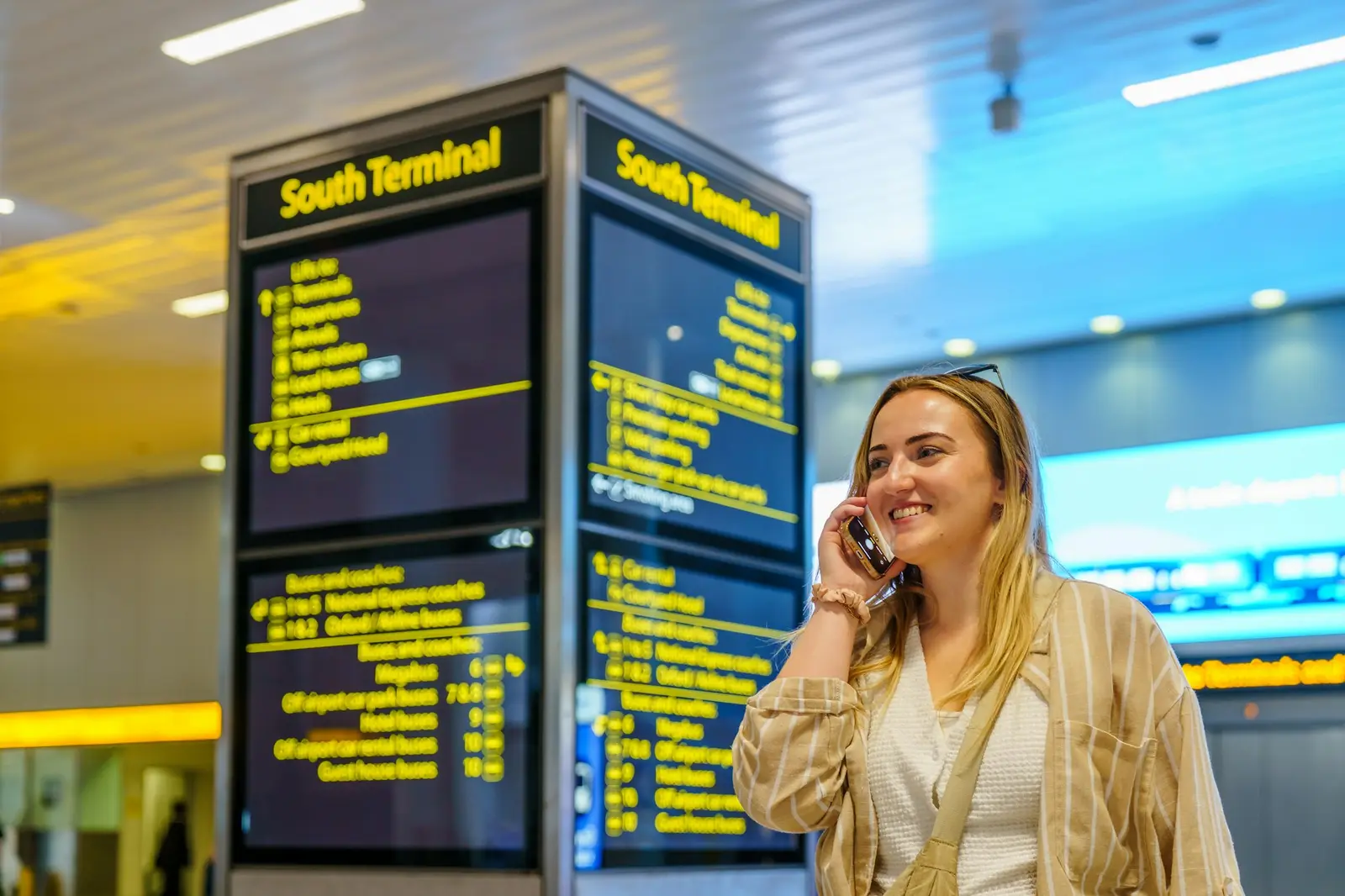
The oldest scams on this list live at airports and stations, because that is where you are tired, loaded with bags, and new. The repertoire has not changed much, which is almost comforting: the driver whose meter is suddenly broken and who offers a “special” flat rate, the meter that runs strangely fast, the route that doubles, the friendly unbadged man inside the terminal who will “help you find a taxi.” Licensed drivers wait at the official rank. They do not hustle arrivals by the baggage belt.
My arrival routine is boring on purpose. I decide the first transfer before I land, while I still have a clear head: the train, the official taxi rank, or a rideshare app where one operates, Uber or Bolt in much of Europe, Grab in Southeast Asia, DiDi in much of Latin America, because a fare fixed in the app cannot be renegotiated by someone reading my confusion. If I take a metered taxi and the driver refuses the meter, I get out and take the next one. I also set up my data before I fly so all of this works the moment I land; my rundown of that whole setup is in my piece on the apps I actually keep on my phone.
5. The street classics: bracelet, petition, “it’s closed today”
These are the scams from every 2015 listicle, and I am including them because they are still running daily in 2026 outside major attractions, largely unchanged, and they are specifically tuned to people who were raised to be polite. Which, statistically, means us.
- The friendship bracelet. Someone warm and chatty loops a bracelet onto your wrist, or presses a sprig of rosemary into your hand, then demands payment and causes a scene when you refuse. The fix is physical: hands in pockets or at your sides near the big sights, and nothing anyone offers gets accepted. Nothing free is free there.
- The petition. A clipboard appears, often held by someone claiming to be deaf or a student, and the signature is followed by an aggressive demand for a donation, while the clipboard conveniently blocks your view of your own bag. I do not stop, I do not sign, and I keep a hand on my zip.
- “It’s closed today.” A helpful stranger near a famous attraction tells you it is shut for a ceremony or a holiday, and steers you to his friend’s shop or an alternative with an entry fee. The attraction is almost never closed. I check opening hours myself, on the official site, and thank him without breaking stride.
None of these are dangerous, exactly. They are embarrassment taxes, and the defense for all three is the same skill, being willing to be flatly, unapologetically unavailable, which I have come to think of as one of solo travel’s quiet gifts.
The pattern underneath all of them
Lay the 2026 scams next to the 1995 ones and the machinery is identical: manufactured urgency, borrowed authority, and a target who is alone, tired, or embarrassed. The QR sticker borrows the authority of a parking meter. The WhatsApp message borrows the authority of your own confirmed booking. The bracelet man borrows the authority of social awkwardness. Every single one dissolves under the same solvent, which is a pause. Scammers price their schemes on you acting in the next thirty seconds. Almost nothing legitimate in travel requires that.
So my whole anti-scam system is really four habits:
- Go in through the front door. Any message about a booking gets checked by logging in myself, never through the link that raised the alarm.
- Treat urgency as the tell. Deadlines, countdowns, and “right now” are the scam’s signature, not its disguise.
- Keep payments on the rails. On-platform for rentals, in-app for rides, official apps for parking and transit. The rails are the refund path.
- Cap the downside. A little day cash, one card on me, the backup card and passport locked up separately, so the worst case is an afternoon, not a trip. And real travel insurance behind it, because some losses you prevent and some you can only absorb; I cover what that policy actually needs to include in my guide to travel insurance for solo female travelers.
The honest bottom line
I will not promise you a scam-proof trip, because there isn’t one, and the people selling certainty are running a small scam of their own. What I can tell you, as of October 2026, is where the real losses are happening: on phones more than on streets, through messages that know your real reservation, stickers over real QR codes, and listings generated by software, with the old bracelet-and-petition theater still playing outside the cathedrals for anyone too polite to walk on. The defense is not vigilance as a mood, which is exhausting and ruins the trip. It is a handful of boring habits, check through the front door, distrust urgency, pay on the rails, cap the downside, that run in the background while you get on with the actual point of being there. The woman in my kitchen with her card halfway out of her wallet learned it the cheap way, by sixty seconds of hesitation. Take her sixty seconds. They are the cheapest travel insurance you will ever buy.