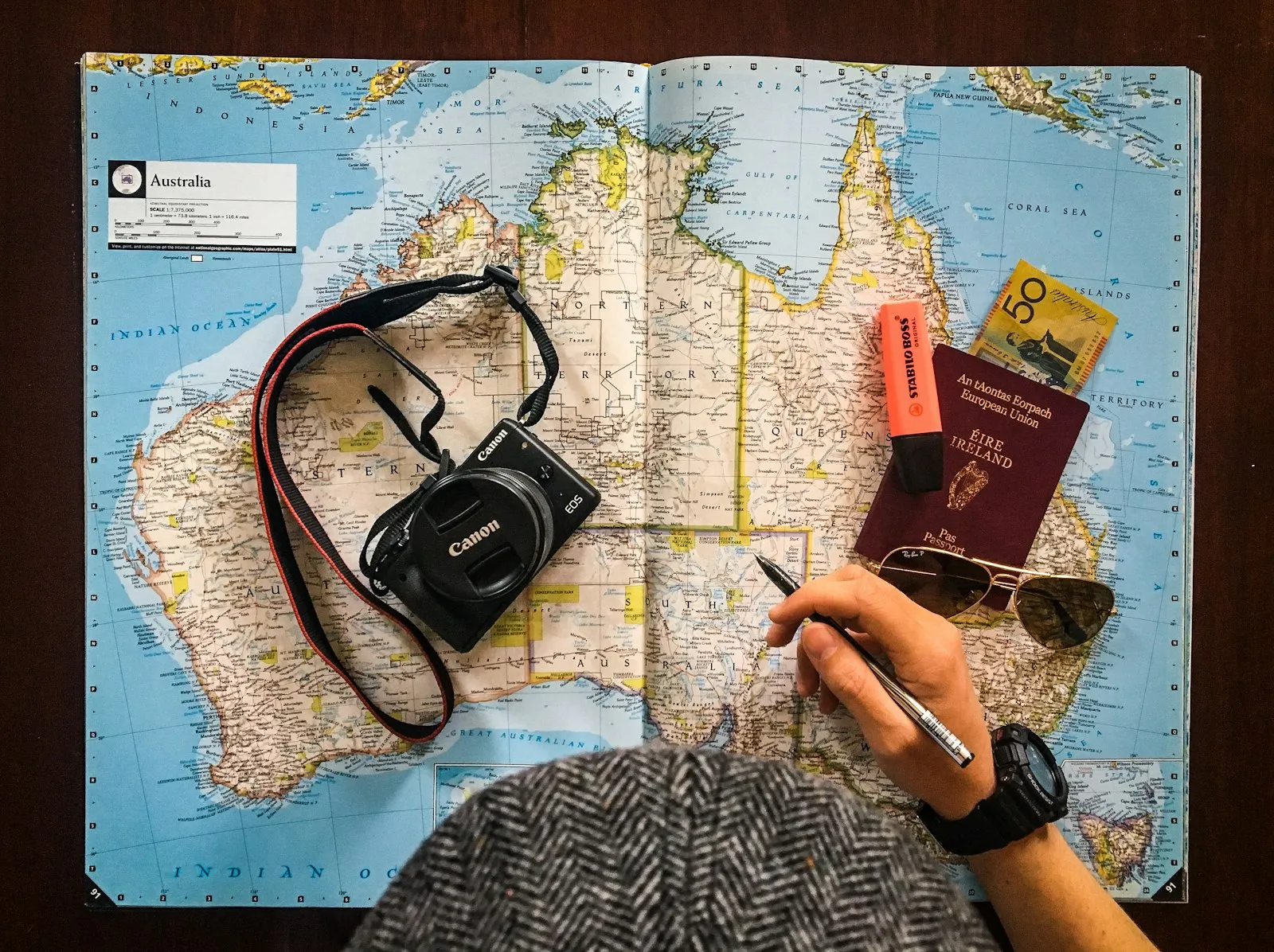
People ask me how to plan a solo trip as if I have a secret, and the honest answer is that I have a sequence. After years of planning every trip for two, and then suddenly planning them for one, I learned that solo trip planning is not harder than regular trip planning. It is just lonelier at the decision points. There is no one across the table to say “the earlier flight, obviously” or “we can’t afford that hotel.” Every call is yours, which is the freedom and the weight of the whole thing. So what I can give you is the order I do it in, every time, so that none of those decisions gets made at 11pm in a panic two days before you leave.
One note before we start. If this is your very first trip alone and the planning anxiety is really a courage question in disguise, I wrote a separate honest guide to traveling alone for the first time that deals with the fear directly. This piece is the process itself, whether it is your first solo trip or your fifteenth.
Step 1: Decide what the trip is for before you decide where it goes
Every solo trip I have planned well started with a sentence, and every one I planned badly started with a destination. The sentence is simple. “This trip is for resting.” “This trip is for proving I can do a big foreign city alone.” “This trip is for walking and eating and not talking to anyone for five days.” You are the only passenger, so the trip only has to serve one person, and you should know exactly what she wants before you spend a dollar.
Part of that sentence is an honest read on your own appetite for alone time. AAA’s solo travel guidance makes the same point I would make from experience, which is that you should figure out how much solitude actually suits you and size the trip to match, or bolt something social onto it if a full week alone sounds like too much. Some of us refill on silence. Some of us start talking to houseplants by day three. Neither is wrong, but a ten-day trip planned for the wrong one of those women is a long ten days.

Step 2: Pick a destination that fits the trip, not the other way around
Once you know what the trip is for, the destination question gets dramatically easier, because most places stop qualifying. A resting trip wants somewhere walkable with good food and low logistics. A prove-it trip can handle a bigger, stranger city. A first solo trip, in my strong opinion, wants to be short, close, and easy, and I keep a whole list of first-trip destinations that fit that brief.
Two filters I apply to every candidate as a woman traveling alone. First, I check my own government’s travel advisory for the country, which for American readers is the State Department’s advisory site. I am not looking for permission. I am looking for specifics, because “exercise increased caution” with a paragraph about pickpocketing in tourist areas is a very different sentence than a paragraph about something worse. Second, I do a quick gut check on how the first night will go. If I cannot picture a simple, boring, well-lit path from the airport to a locked door, I either fix that with money or pick somewhere else.
Step 3: Set the budget before you open a booking site
Booking sites are designed to move your ceiling, and when you travel alone there is no second person to catch you doing it. So before I look at a single flight, I set three numbers. I decide the total I am willing to spend, the nightly cap for the room, and a buffer of roughly fifteen percent that I pretend does not exist until something goes sideways. Solo travel has a real structural cost problem, which is that the room that costs two people half each costs you all of it, and I have written honestly about what solo travel actually costs and how I budget for it rather than pretending it is cheap. It is not cheap. It is worth it, which is a different claim.
The practical move is to decide, in advance, which category gets the money. On my trips the room gets it, because a safe, central room in a neighborhood where I can walk home at 10pm is not a luxury line item for a woman alone. It is the foundation the whole trip stands on. Flights, I take the cheap one if it lands in daylight. Dinners, I go back and forth. But I decide before I book, not while I book.
Step 4: Book the flight and the room together, in that order of attention
Here is the actual booking order. I find flight options first but I do not buy. Then I find the room. Then I buy both in one sitting, because a great fare into a city where every decent room is gone is not a great fare. One planning essay I like, by a traveler named Auzin Ahmadi, describes booking flights and lodging together and then immediately mapping the transport from the airport to the room, and that matches exactly how I do it. The airport-to-bed problem is the single most repeated piece of advice in every solo travel forum I have ever read, and it deserves its reputation. Solve it while you are still on your couch. Know the train line, the official taxi stand, the rough cost, and what you will do if you land late.
Two rules I hold even when they cost money. I land in daylight whenever I possibly can, because arriving alone in a new city in the dark is the situation I most want to avoid on night one. And I read the recent reviews of the room, not the rating, with an eye for the words women use. “Felt safe walking back at night” is worth more to me than a ninth point of score. If the budget is tight, a private room in a well-reviewed hostel gets you a locked door and a front desk for far less than a hotel, and I compared those options honestly in my hostel versus hotel piece.
Step 5: Build a skeleton itinerary, then defend the empty hours
Now the fun part, and the part people overdo. My itinerary rule is one anchor per day, two at most. An anchor is anything with a time attached, a museum entry, a day tour, a restaurant reservation, a cooking class. I check the opening hours when I plan it, because an anchor that is closed on Tuesdays is not an anchor, it is a disappointment with a confirmation number. Everything else goes on a loose list on my phone, sorted by neighborhood, so that whatever direction the day drifts, I know what is worth seeing nearby.
Then I do the thing that took me years to learn. I leave holes, on purpose, and I refuse to fill them. Ahmadi calls the gaps the places “where spontaneity and surprises happen,” and she is right, but I will add the solo-specific reason. When you travel alone, the empty hours are where the actual solo travel happens. They hold the long lunch you did not plan, the second walk through the neighborhood you liked, and the bench you sat on for an hour because nobody was waiting. A schedule with no gaps is just a work trip with better scenery. If sitting alone with an unscheduled afternoon sounds uncomfortable rather than luxurious, that discomfort is worth taking seriously, and I wrote about learning to enjoy my own company because it is a skill, not a personality trait.
One honest warning from the other direction. An itinerary that is all holes fails too, especially in the first days, when loneliness does its best work on an empty calendar. Book one social anchor early in the trip, a food tour or a class, something with a purpose and other humans in it. The forum veterans suggest exactly this, finding an activity with a built-in reason to talk, and it works.
Step 6: Lay in the safety layer
This is the layer that planning for two lets you skip and planning for one does not. None of it is dramatic. All of it is non-negotiable for me, as of October 2026, and it takes about an hour total.
- Someone at home gets the skeleton itinerary. Flights, the name and address of where I am sleeping, and a rough shape of each day. I update them when plans change, and we agree on how often I will check in.
- Travel insurance gets bought when the trip gets booked, not the week before, so that a cancellation is covered from day one. I went through the solo-specific considerations in my travel insurance guide.
- Copies of my passport and cards live in two places, one digital and one physical, packed separately from the originals. Money and cards get split the same way, so losing one wallet is an annoyance and not an emergency.
- The first night gets over-planned. Transport booked or mapped, room confirmed, and a screenshot of the address in the local language saved to my phone, because addresses do not require Wi-Fi when they are screenshots.
That is the whole layer. I keep the deeper version, the habits I actually use on the ground, in my solo female travel safety guide, but the planning-stage work is just those four items done early instead of frantically.
Step 7: The week-before pass
A week out, I do one slow pass over the whole plan, and it catches something almost every time. I re-check the opening hours of my anchors, because museums close for renovations and restaurants die between booking and departure. I make the reservations I was putting off. I check that my passport is not quietly close to expiring, which sounds absurd until you meet someone at a check-in desk to whom it happened. And I do a real test pack, bag zipped, lifted, carried up a flight of stairs, because alone means every bag is yours on every staircase. My packing list for solo female travelers exists because I used to fail this step routinely.
The forum regulars say “knowledge is strength so plan as much as possible but be flexible,” and the week-before pass is where that lands for me. The plan is finished when the fixed points are confirmed and the rest is allowed to stay loose.
What the plan cannot do
I want to be honest about the limit of all this, because I was a world-class planner long before I was a solo traveler, and I know the trap. There is a version of trip planning that is really just anxiety wearing a productive outfit, the fourteenth review read, the itinerary revised again at midnight. The plan cannot make the nervousness go away, and it is not supposed to. The night before my first trip alone I had everything booked, mapped, and backed up, and I still sat on the edge of the bed wondering if I could do it. The plan did not remove that feeling. It just made sure the feeling was the only problem I had. That turns out to be the entire point of planning a solo trip well. You handle everything that can be handled in advance, so that when you land, the only thing left to figure out is the good part.
So pick the sentence the trip is for, choose the place that serves it, set the numbers, book the flight and the bed together, sketch the skeleton, lay in the safety layer, and do the slow pass a week out. Then go. The plan will hold.